EUROPE 2025 STORY PART 3
EUROPE 2025 STORY PART 3 COMPLETE
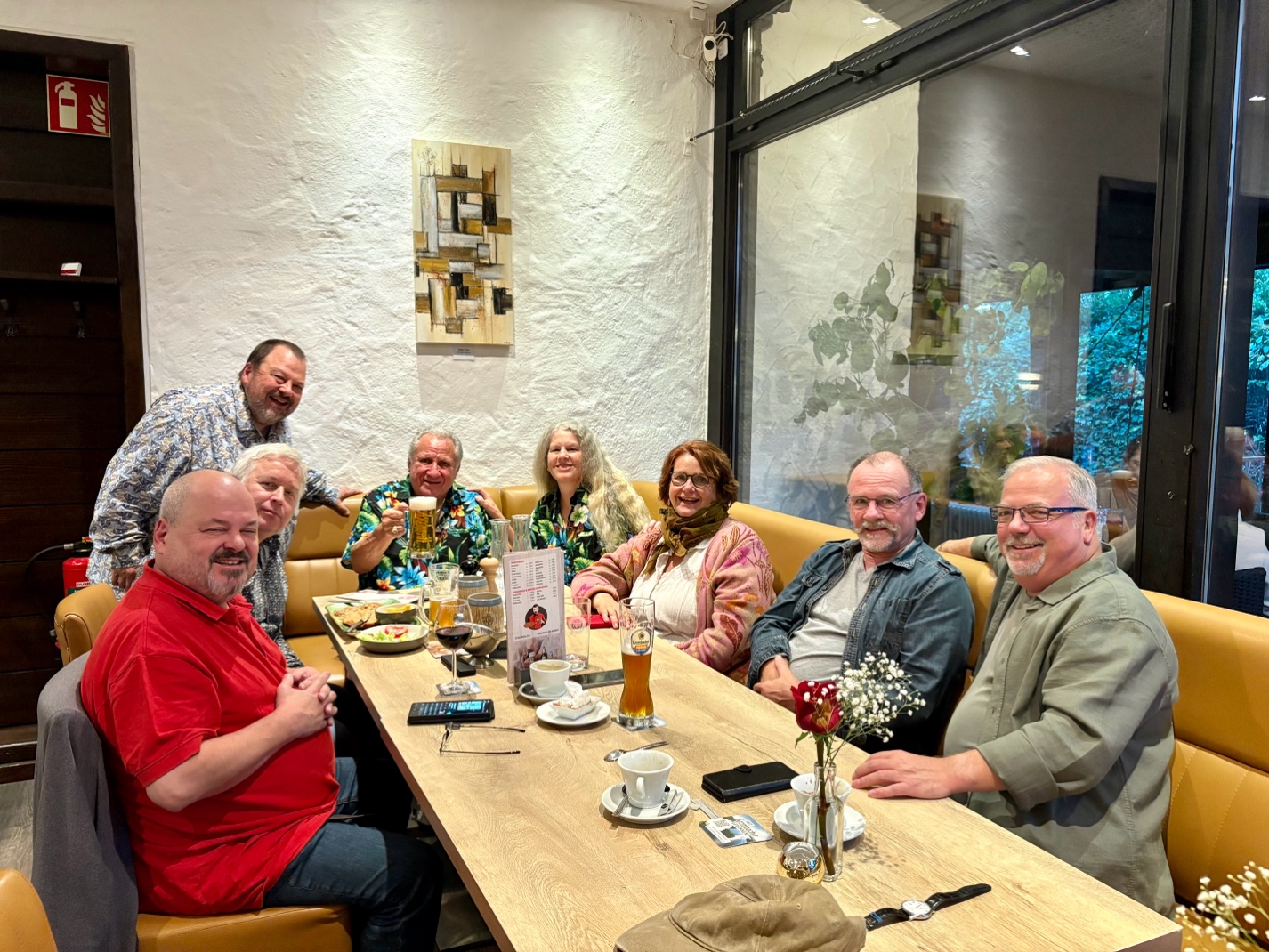
It has been said that old friends are the best friends. I don’t know who said it, but it seems that they, my old friends, are the best, and closest in my life today. The good news is, they, and we, have survived to live through more history, and adventures than those who were called to “check out” early. From the pictures of our other gatherings in Germany, you can see that the field has narrowed somewhat. Some due to illness, some due to bad habits, and others just ran out of space on their allotted calendars. Nonetheless, here is a gathering of our Deutsche Posse at the usual restaurant that we use every odd-numbered year. As per usual, there was no shortage of schnitzels, beer, and/or wine. Some of these stalwarts go back to 1989 with us.
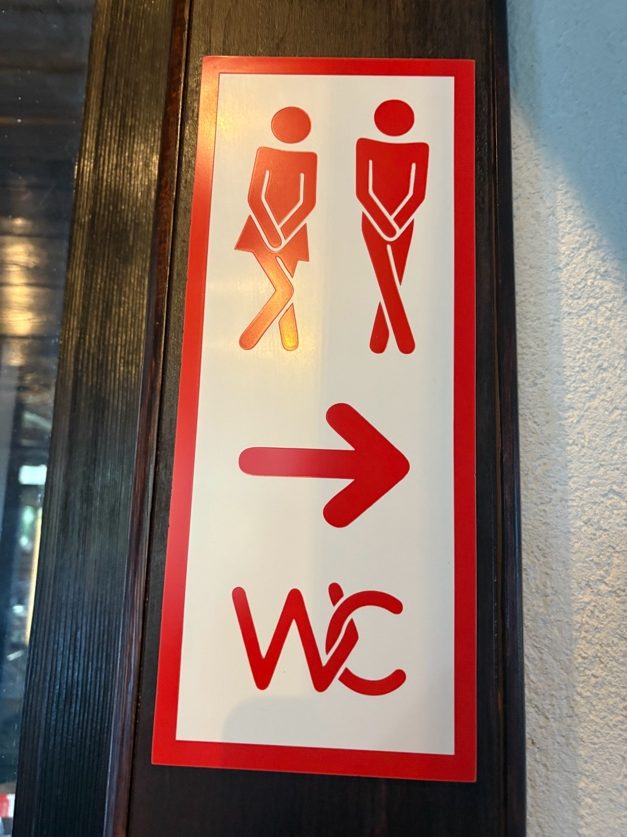
It’s signs like this that keep us coming back to the same restaurant for our gatherings.
They also served some of the biggest schnitzels we’ve ever seen. This is their normal size schnitzel.
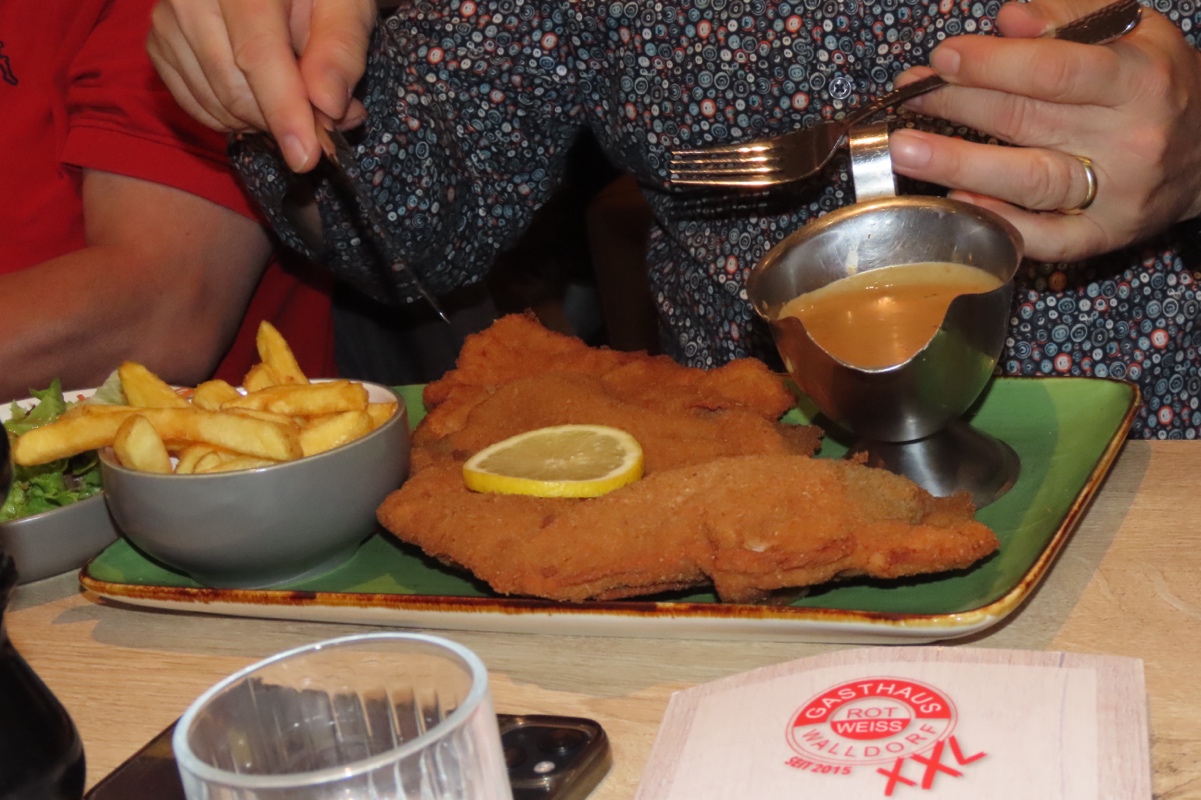
Perhaps this is why the restaurant is called the XXL GASTHAUS. The XXL schnitzel is approximately three times the size of this one. After the gathering, Naomi and I usually go to the home of Peter and Astrid Koch, who handle the invitations, et cetera for our guests. This is us and them in the backyard of their house.
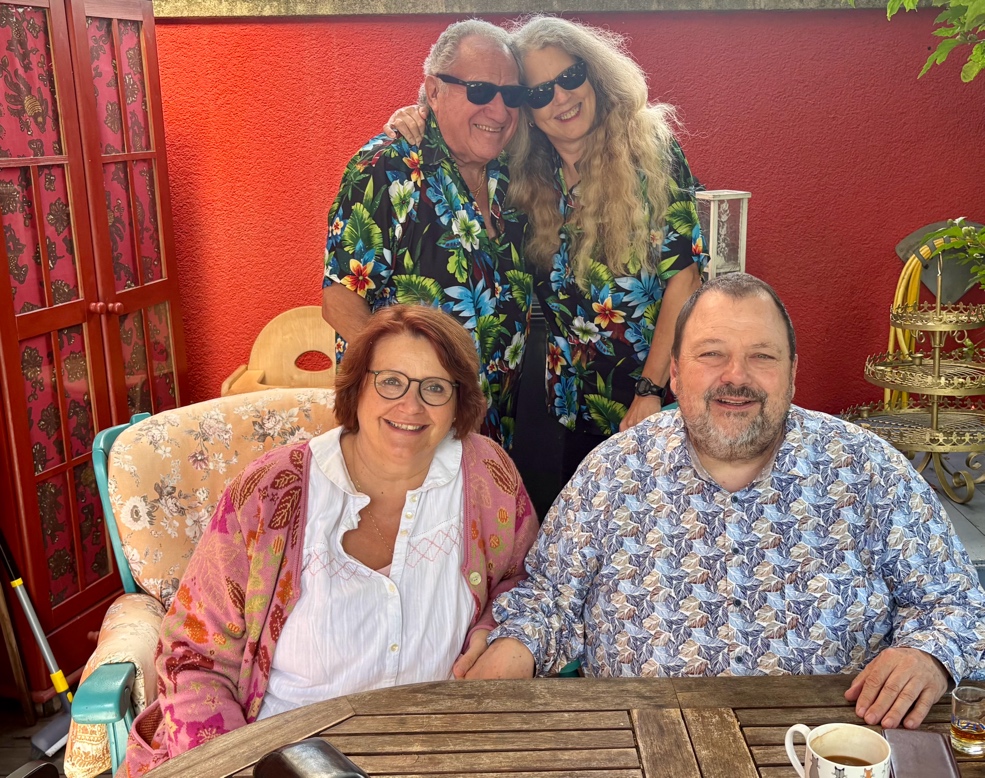
Having lived fourteen years in Germany, in the Frankfurt area, seeing our friends was just about all that was on our agenda. We then took off for Prague to visit our “Czech Mates.”
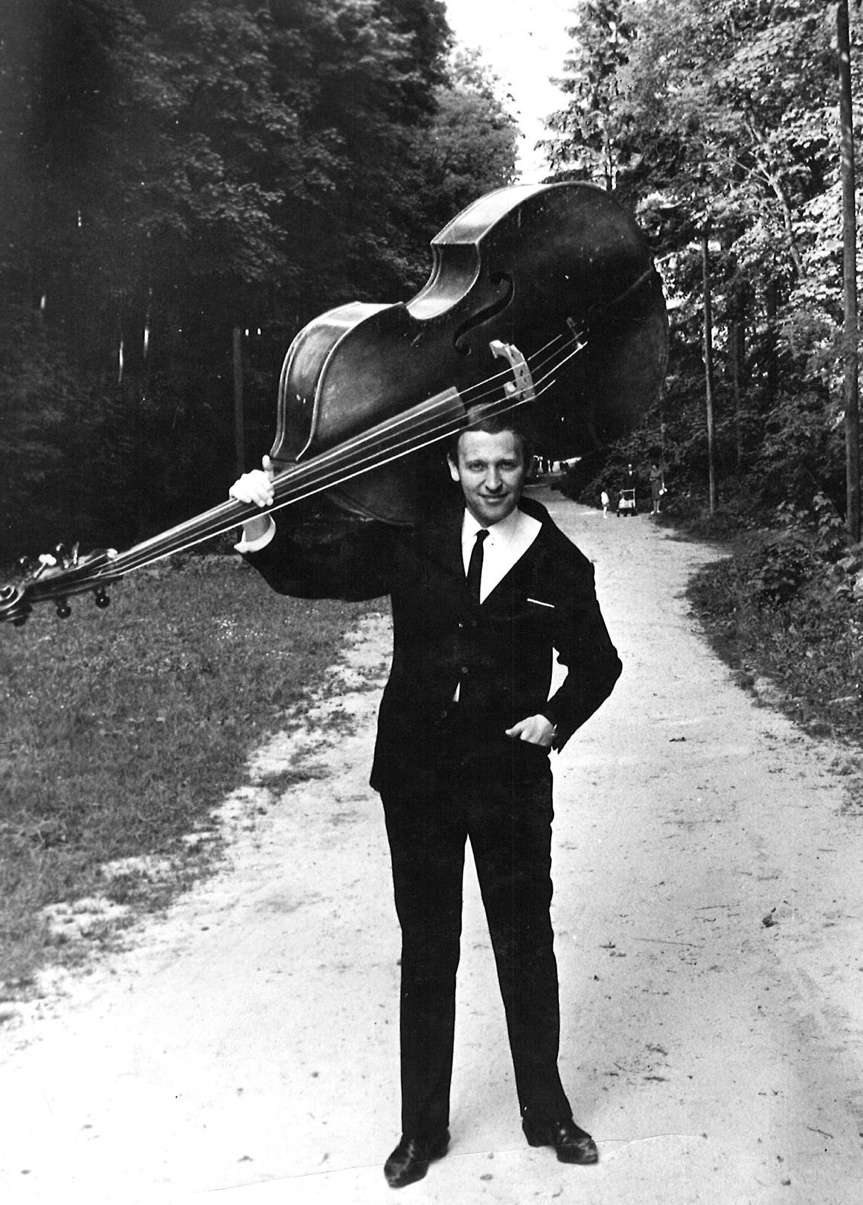
Upon our arrival in Prague, we took a taxi to our favorite hotel, whereupon we were ensconced in our favorite suite, with a wonderfully commanding view of the town. It is also walking distance to the “Old Town,” museums, our favorite market for picking up some fresh fruit, libations of the adult type, and various cheeses and cold cuts for mood enhancement. Yes. Prague is almost like a second home for us, except for the language of the locals…No problem. Most of the Czechs speak English. Thus armed with our goodies, it was time to call our Czech Mates, Sascha, husband of Andrea, Andrea, and Bela, the mother of Andrea. Sadly, the “Man of the House,” Karel had passed last year. He had lived a long, and very productive life, as both a bass player and piano player, as well as a fine arranger/orchestrater. His music is still being played today by bigbands throughout Europe.
Here is Karel, as a young man, on his way to a gig on bass.
One of our first stops upon reuniting with Bela, Andrea, and Sascha, was to pay homage to Karel at his gravesite. As you can see, we came prepared with his, and our favorite Czech liquor, Becherovka. Yes. A “Toast to the Man” as we promised him. Yes. That’s Naomi wetting her lips with the “Bottle of Talent.” That’s me next to her, following suit.
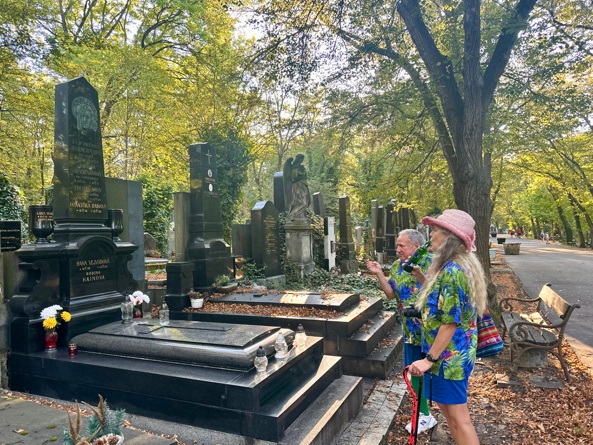
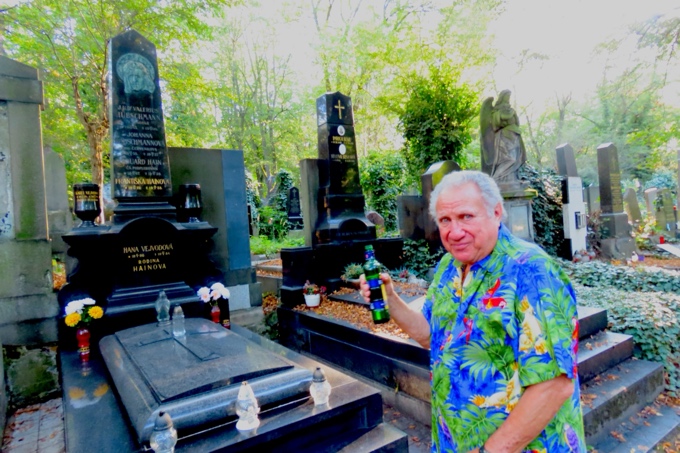
Now that we had shed our tears, as well as recalling some goofy stories that involved Karel and us, it was time for creating new memories….And perhaps more goofy stories.
As usual, Sascha, whose knowledge of Czech history is encyclopedic, took us on yet another “trip to yesteryear.” It began with a visit to an incredible castle, the Zbiroh Castle. Its stories, as well as its sites are the stuff of novels, and Technicolor movies of the 1950s. Strangely, during the years that we spent in Europe, mainly Germany, we never saw this incredible chunk of intrigue when we would be driving from Frankfurt to Prague. For those of you planning to visit this jewel, it’s located between Pilsen and Prague. Its owners and residents through the years include Ottokar II of Bohemia, Charles IV, alchemists, Freemasons, including Alphonse Mucha (more on him later), and, of course some Nazi SS operatives during WW II. The Freemasons gathered here to indulge in mystical rituals, quite similar to the group featured in “PEGGY SUE GOT MARRIED.” Among other artifacts are the oldest known Templar manuscript, and the only complete Bronze Token, created and used by the Templars rather like a modern day credit card. The Templars continue to gather today keeping the myths and deeds alive. For those of you planning a trip to this hallowed fantasy-land style castle, be aware, YOU CAN SPEND THE NIGHT IN CHAMBERS, once occupied by the past visiting royalty.
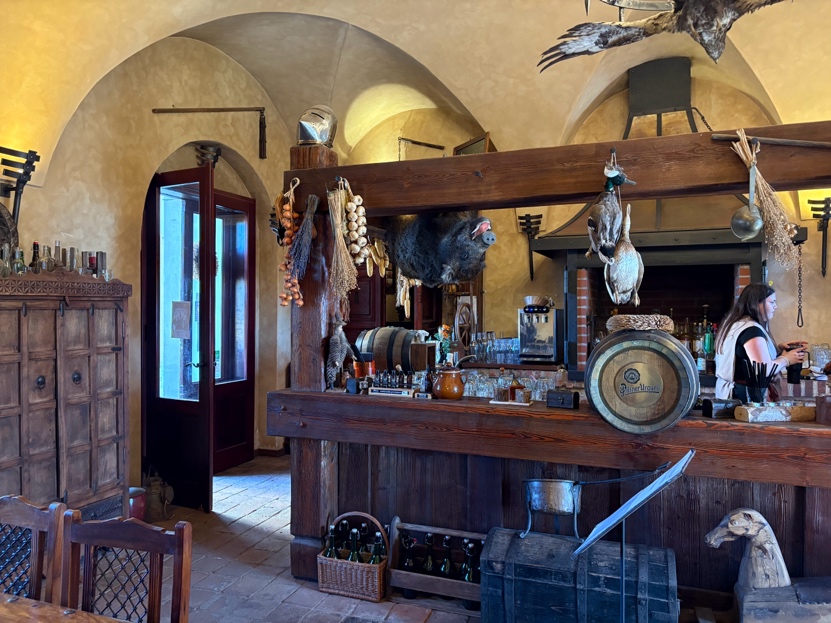
Upon entering the castle, we were immediately ushered into the bar area, where we found a “domicile for the dead.” Not exactly our “cup of tea,” but the food and drinks were fine.
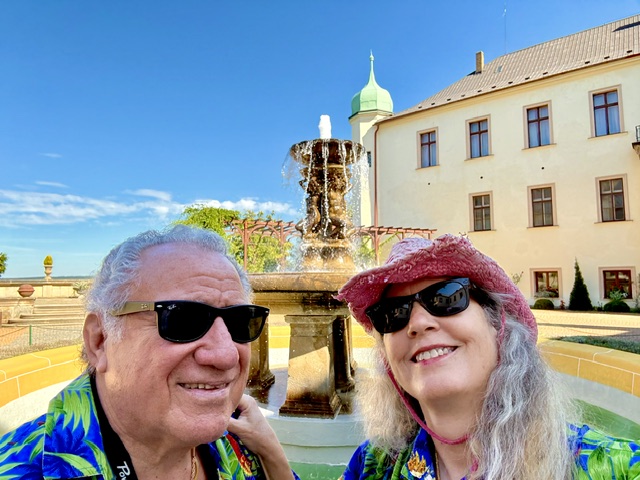
Here we are at the Chateau/Castle Zbiroh.
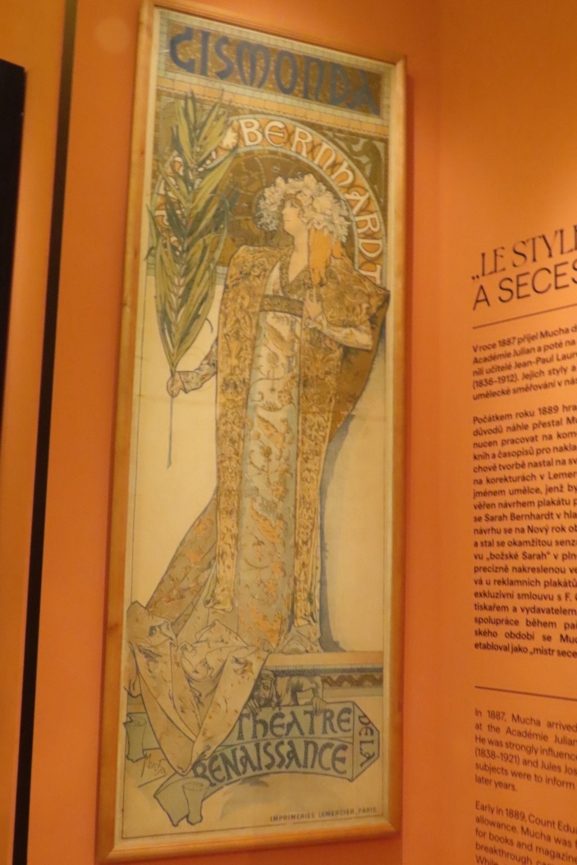
Mentioned above, Alphonse Mucha, was a Czech graphic artist who lived from 1860 through 1939. Mucha is pronounced MOO CHA. The CH is guttural like German, or Hebrew. He was born 24 July, 1860 to be exact, in the small town on Ivančice, in southern Moravia, which was then a province of the Austrian Empire, currently a region of the Czech Republic. Sometimes one needs a history book just to keep up on the “changing of the guard” of various parts of Europe to really nail down where one was at, and at what time. Moving right along with this narrative, living in Paris, during the Art Nouveau period, he came to prominence as a result of his singularly stylized theatrical posters of the French stage actress, Sarah Bernhardt. Yes. She of the many “Final tours and dying scenes.” This was his “Breakthrough” poster of Bernhardt, which appeared on the streets of Paris 1 January, 1895, causing an immediate stir. Ms. Bernhardt ordered four thousand copies of the poster for 1895 and 1896, and gave Mucha a six-year contract to produce more. Suddenly Mucha was famous, and in demand. Click to enlarge.
(Click to enlarge)
I’m devoting this much space to Mucha because he was instrumental in bringing attention to the Zbiroh Castle, which led to the rediscovery, and interest of the prior tenants, as well as the availability of it for contemporary functions, along with some very wonderful social things. More on that later.
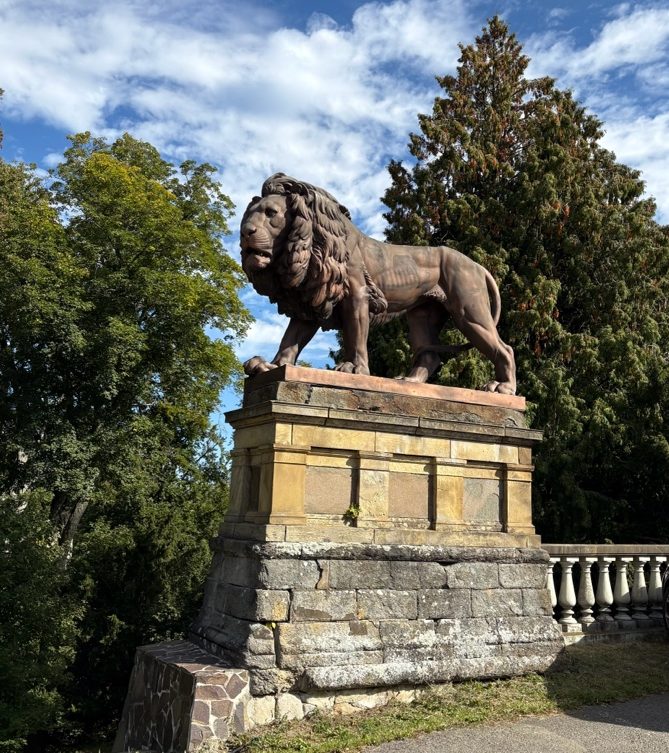
No castle/chateau would be complete without a lion at the entrance.
Here is part of the Grand Entrance to the castle/chateau.
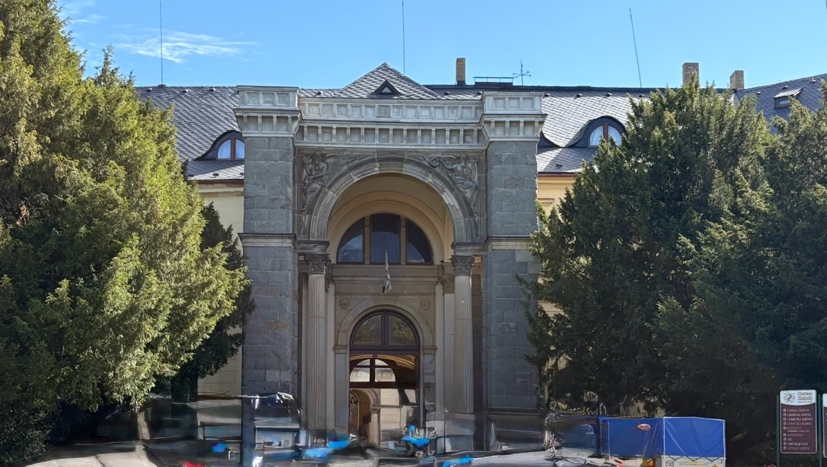
Here is a brief history of the Knights Templar in this region that I lifted from a picture on a wall.
“The first documented history of the Knights Templar is inseparably connected to the First Crusade, which took place from 1095-1099. During this period, the crusaders managed to conquer the territories of the Holy Land, including Jerusalem, and founded a Christian state known as the Kingdom of Jerusalem.
“Unarmed pilgrims were often victims of thefts, murders, rapes and forced slavery. It was thus that a group of nine French knights decided to attempt to halt, founding an order called Pauperes commilitones Christi Templique Solomonici (Poor Fellow-Soldiers of Christ and of the Temple of Solomon), today perhaps better known as Knights Templar or simply Templars. The actual date of the founding of the order has been subject to considerable debate. Most often, AD 1119 is given, despite the fact that archbishop William of Tyre (circa 1130-1186) notes in his 1170-1184 chronicles that the date was 1118. However, it is entirely possible that the actual year was 1120, as it is from December of that year that we find the oldest preserved historical reference to the existence of the Order.”
To continue: here is another document that we found hanging on a wall.
“On Friday 13 October 1307, within the territory of France, secret writings were opened containing the directives of the French King Philip IV, the Fair. These ordered the arrests of the knights of the powerful Order of Templar. The charge was heresy. On 2 May 1312, at a council held in the French town of Vienne, Pope Clement Vissued the Vox in Excelso bull, which ended the Order and would only re-grant permission with fresh papal approval. With this, the Pope officially ended the Templar order. Its property was transferred to the Hospitallers (Maltese Knights).
“At first, Jacques de Molay, the last Grand Master of the order, admitted to the charges, but then he decided to withdraw his confession. On 18 March 1314, at the Ile-des-Javiaux, an island on the river Seine in the centre of Paris, de Molay was publicly burned at the stake.
“The kings, of Spain and Portugal went on to create new orders into which the Templars could transfer. In Germany, at the Mainz synod, headed by Peter of Aspelt, individual members of the former order were found not guilty and acquitted.”
Yes. They rode into battle with full armor, below left. The mask below, next to the armored rider, was one of their torture devices, as in “The Man In The Iron Mask,” which still has blood in it. These folks weren’t goofing around. As we used to say, when shooting marbles in grammar school, “We’re playing for keeps.”
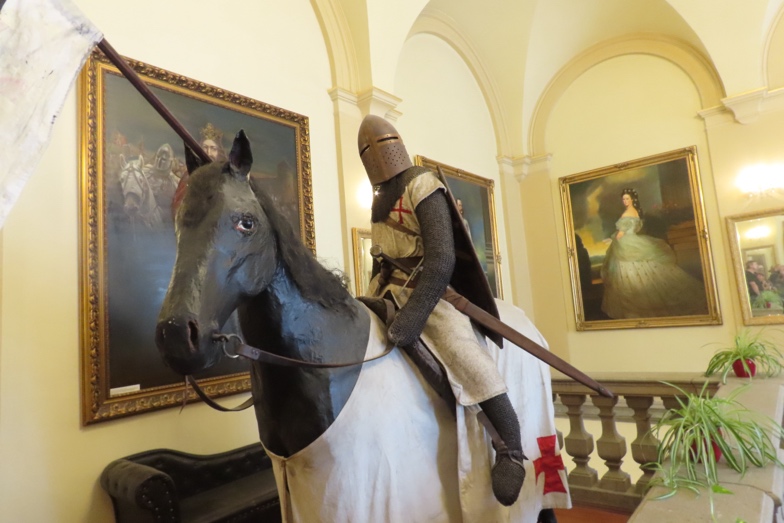
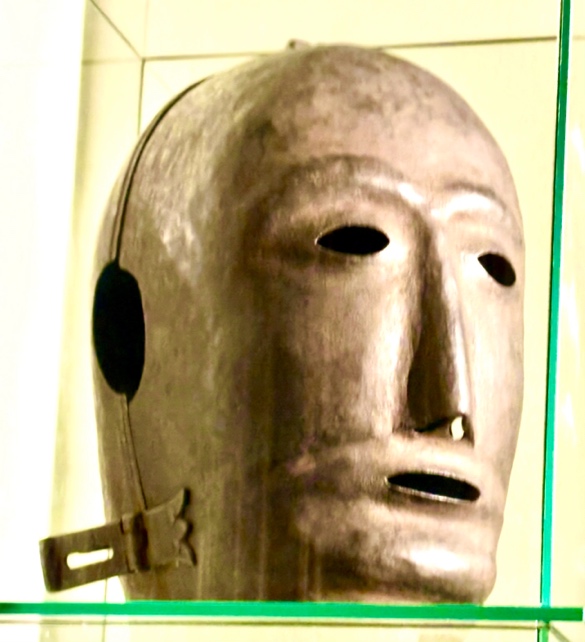
You only need to know this stuff if you’re going to be on Jeopardy.
Meanwhile back at the Mucha story:
When last I wrote of Mucha, he had just broken through to fame and fortune. His status was such, that when in 1918 the independent state of Czechoslovakia was formed, he designed the first postage stamps and banknotes of the new country. That’s what I call “pretty heavy juice.” Following numerous showings in, and around Prague, including the first “Slav Epic” exhibition, he exhibited “Five Slav Epic” canvases at the Art Institute of Chicago, followed by a “major retrospective” at the Brooklyn Museum in New York. Before, and during this period, he was constantly active in the Freemasons, being elected Sovereign Grand Commander of the Scottish Rite for Czechoslovakia. Following this, he embarked on several research trips to the Balkans and Mt. Athos for the remaining “Slav Epic” paintings. On 1September, 1928, the compete cycle of the “Slav Epic” was presented to the City of Prague by Mucha; nineteen completed canvases were shown at the Trade Fair Palace. I could go on and on listing his accomplishments, but it would take up more space and time than the story of the Templars. Suffice it to say that this man was a brilliant, talented, and dedicated “do-gooder” on a grand global scale. He was also busier than a one-armed paper-hanger. On 15 March, 1939, Germany invaded Czechoslovakia. Mucha, of course, was among the first people arrested by the Gestapo due to his connection with the Masonic and Slavic nationalist activities. This paragon of virtue, and artistic brilliance died in Prague on 14 July, 1939, and is buried at Vyšehrad Cemetery. The Alphonse Mucha Nouveau Museum is not far from the Zibiroh Castle/Chateau. It houses some of his great works. It really opened my eyes to the Art Nouveau movement throughout Europe. Here is a statement made by Alphonse Mucha.
“THE PURPOSE OF MY WORK WAS NEVER TO DESTROY, BUT ALWAYS TO CREATE, TO BUILD BRIDGES. BECAUSE WE MUST LIVE IN THE HOPE THAT HUMANKIND WILL DRAW TOGETHER, AND THAT THE BETTER WE UNDERSTAND EACH OTHER THE EASIER THIS WILL BECOME.”
This is Andrea and us at the entrance to the Mucha Museum.

This is another example of his “Poster Art.” And to think, it all started with a French Stage Actress.

(Click to enlarge)
After all of this, and before going on to our next eye-opener, it was time for at least a double espresso. Yes. A couple of doubles. We had places yet to go, and more super stuff to see. Sascha was priming us for what was to come. Here we are with Andrea and Sascha having our “go-juice.” Andrea’s eyes would soon open wide.
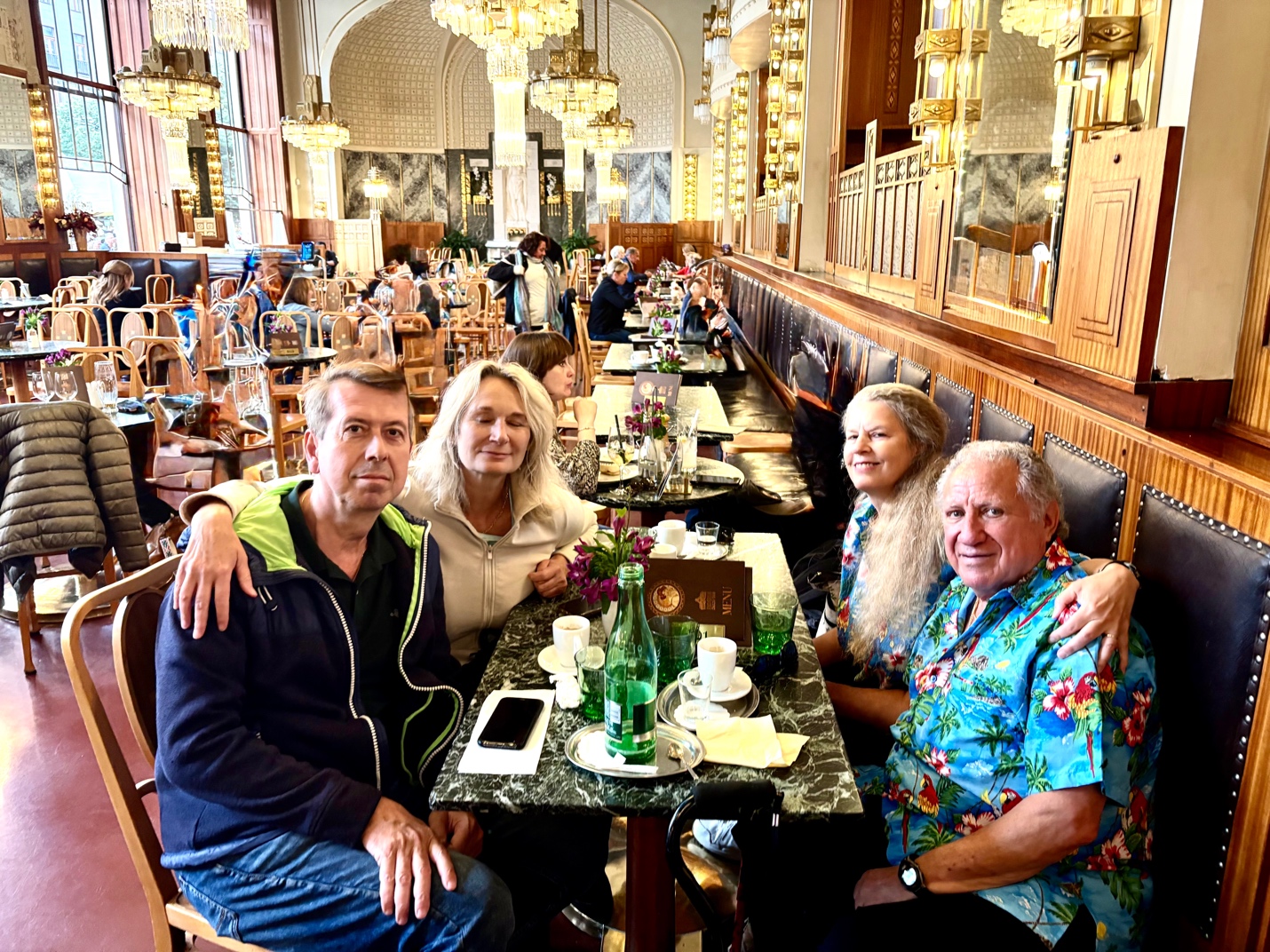
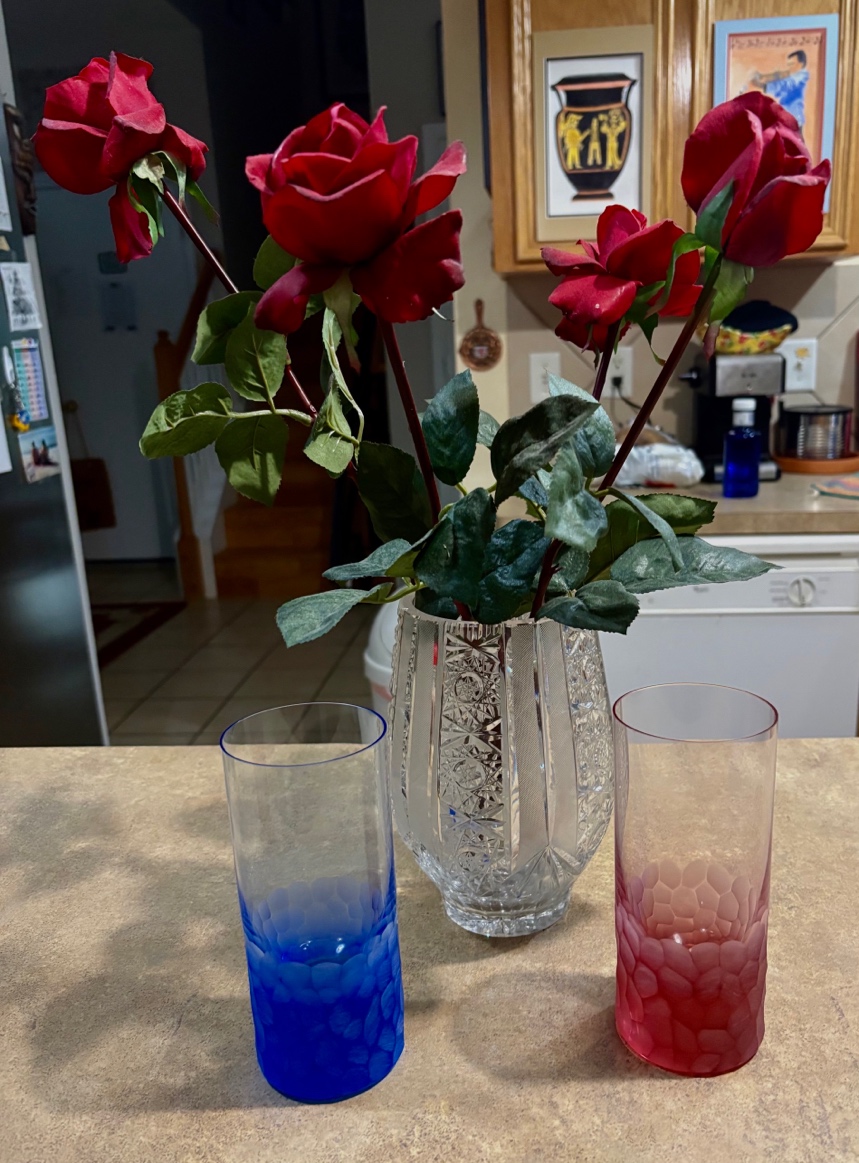
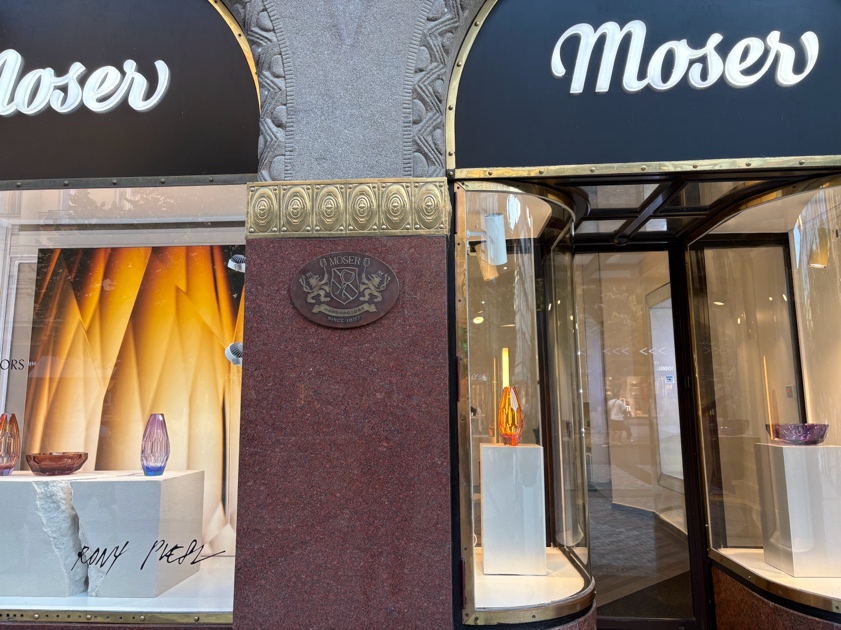
The Czech Republic is noted for its fine hand-carved Bohemian crystal. Whenever we visit Prague, we always pick up either some glassware, bowls, chandeliers, or just some other bits of their incomparable art. Having been visiting this haven of light-sparkling stuff for a few decades, we have a pretty good collection at home. However, we were not ready for what was about to happen. Yes. Sascha strikes again! We had never heard of Moser glassmakers, which was founded in 1857 by Ludwig Moser in Karlovy Vary, which by the way is also the home of Becherovka. During the ensuing years, their reputation for exceptional quality has spread globally. To really get an idea of what these folks put out, simply go to the home page for Moser. What really knocked our socks off was when Sascha, who apparently is a regular customer with these people, ushered us into the gallery for a private showing of their creations, followed by asking me which glasses I would like for my birthday present. Needless to say I was a bit taken aback, but I made my choice of high-ball glasses…pink for Naomi and blue for me. The vase was a gift from a previous visit. It had survived WW II in the hands of Běla and Karel, Andrea’s parents.
This is the front of the Moser store. Its quiet reserve belies what’s within.
This is what greets the patron upon entering. How do you spell “Home-court advantage?”
Nothing here says, “On sale.”

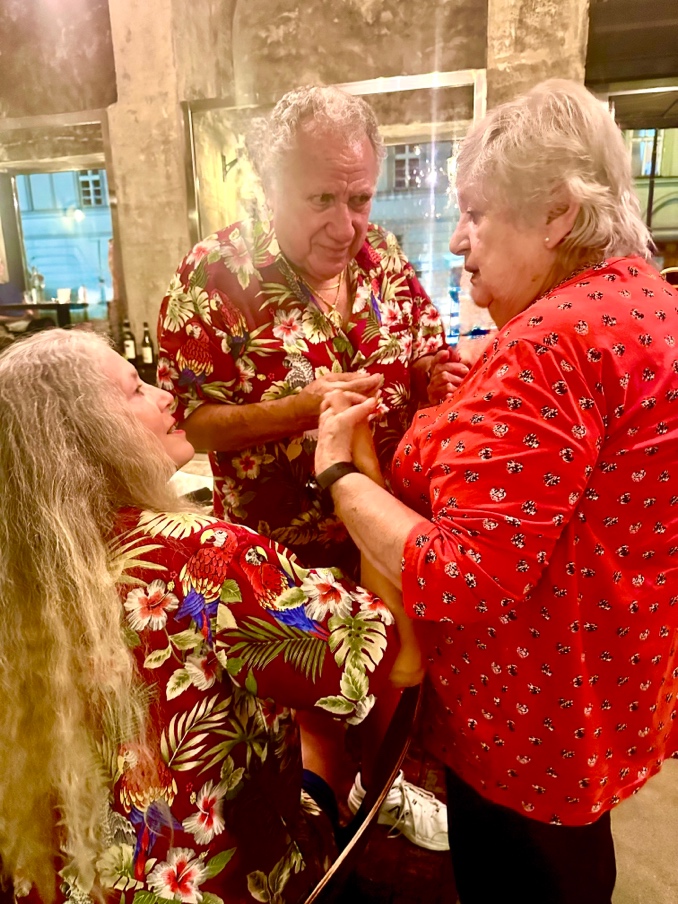
After this foray into the land of top quality crystal, it was time for some top quality num-nums. Yes. Our favorite steak house in Prague, La Bottega Linka. Quite simply, they are world-class. The foods, preparation, and service is all top drawer. No vegetarians allowed! This is us and Běla deciding what we are going to have. As you can see, it was a heavy-duty decision.
What to do in Prague after dinner? Go hear some live jazz in one of the many venues where Karel used to play, The “Jazz Dock.” This is the group that played there. Very hip sounds. Press to enlarge.
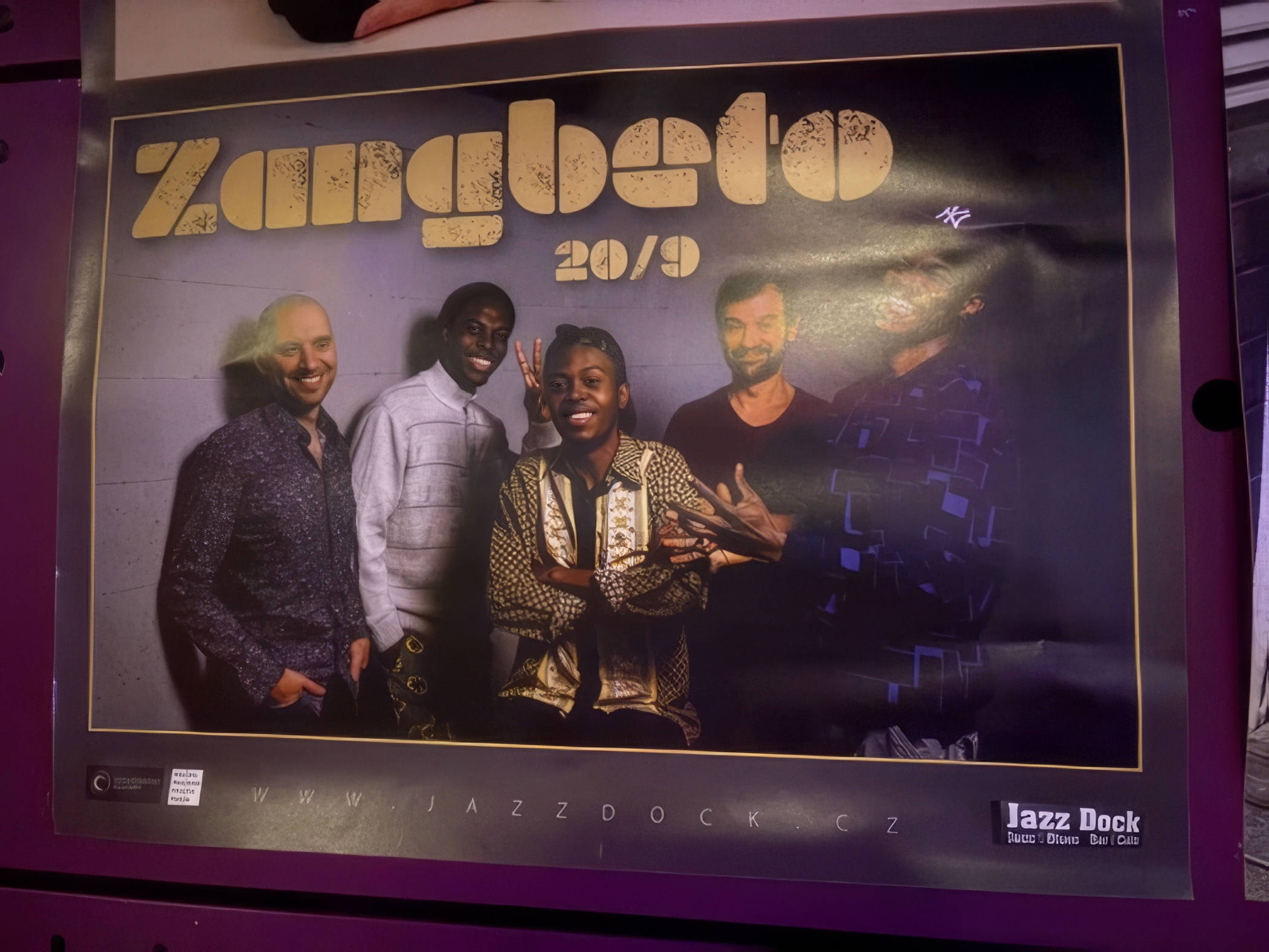
(Click to enlarge)
After hearing these guys “Play it like it is,” we hoofed it back to our hotel for a good-night’s rest. Always looking forward to tomorrow.
Walking the streets of Prague, one never knows what one is going to encounter. How about this car for a couple of extra glances?
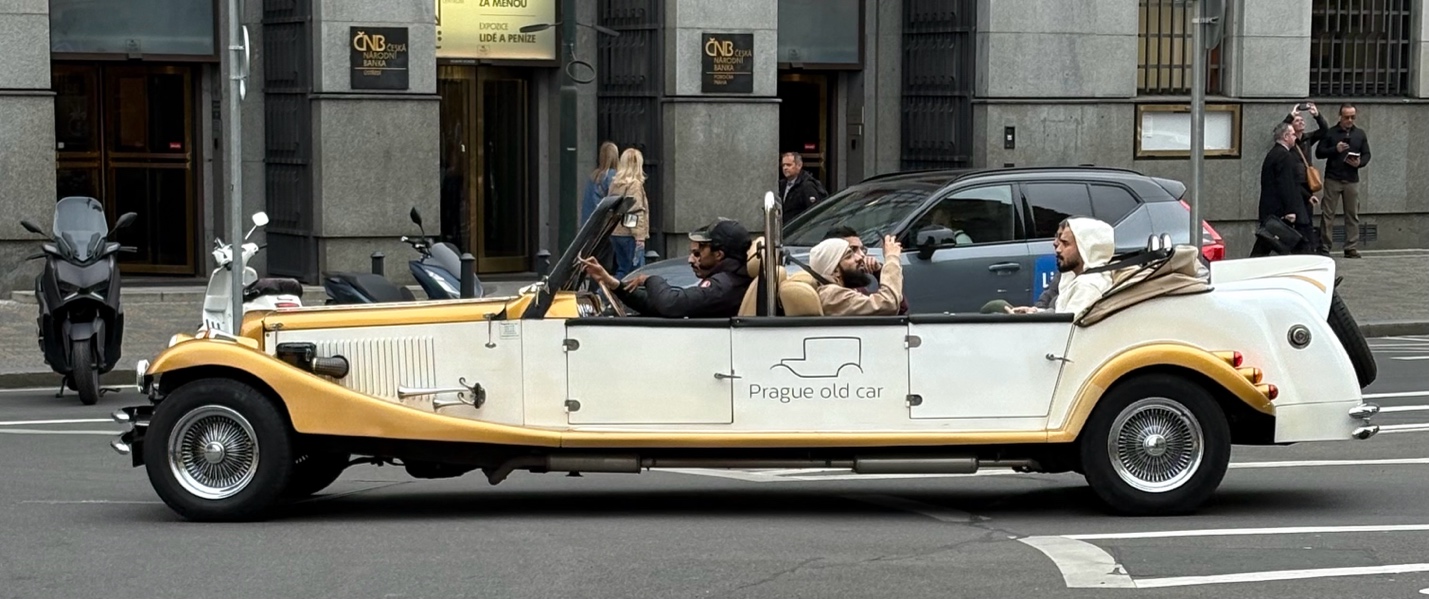
(Click to enlarge)
After a couple of hours of walking around, it was time to go to Chabad Synagogue, to usher in the Jewish New Year, Rosh Hashana. Time for Jewish prayers in Prague, and not a nazi in sight. WE WON!
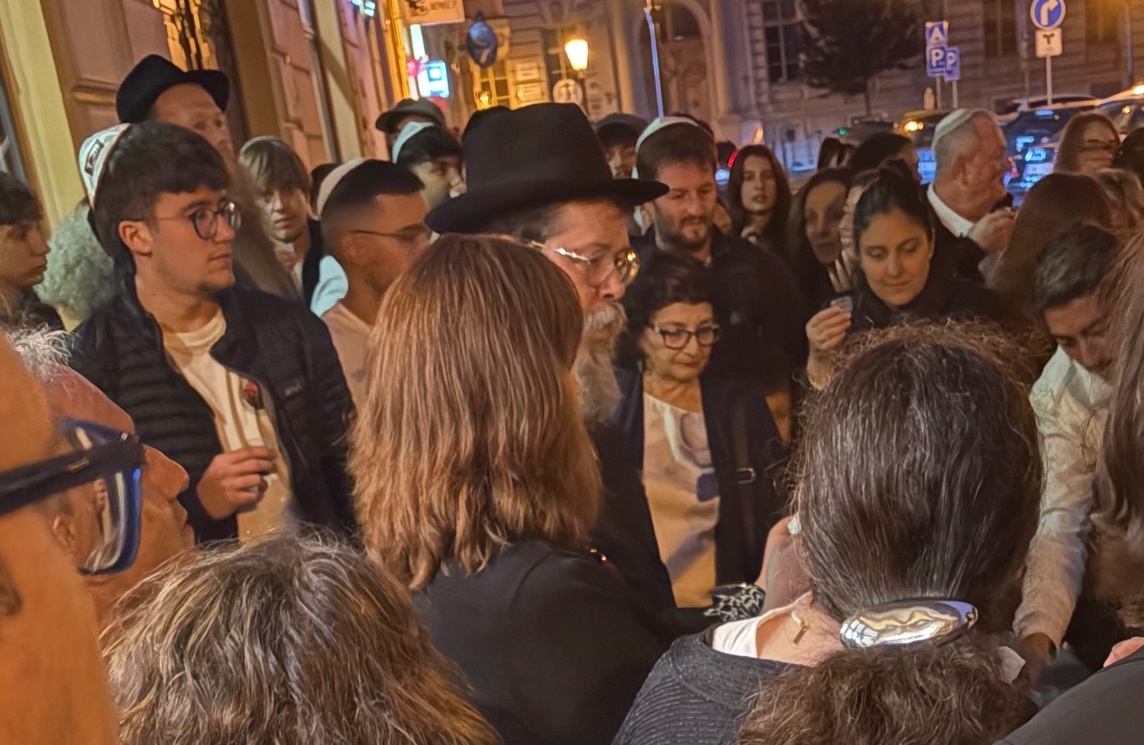
Thus our European trip for 2025 ended. We walked back to our hotel, packed, and flew home the next day. Visiting with our Czech mates, and revisiting places that we had seen, and experienced before, is fun, sentimental, and, thanks to folks like Sascha, Andrea, and Běla very educational. Oh. I almost forgot. Yes. They have elevators in Prague!