JULY 2019 EPCOT CENTER, CANCUN,EASTER ISLAND STORY
JULY 2019 EPCOT CENTER, CANCUN MEX., SOUTH AMERICA STORY
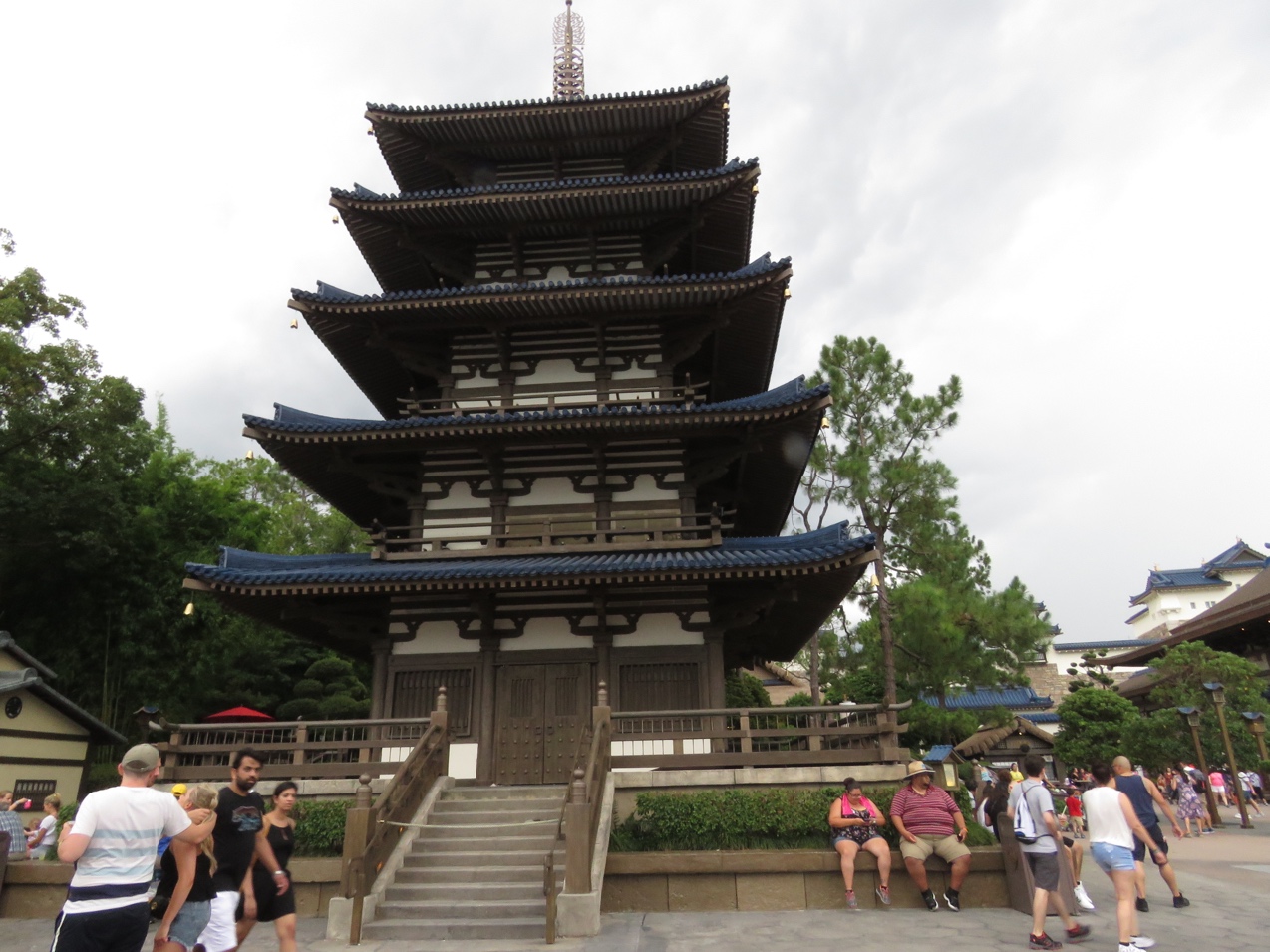
“FFF” in music means “very loud.” For this caper, “FFF” simply means Fantasy, Fabulous, and Fantastic. We had never been to the Epcot Center, in Disneyworld, Florida. This, for us, was the reason for going to this fantasy place. Unlike Disneyland, which has its various lands, Tomorrowland, Fantasyland, et cetera, Epcot Center, or EC, for sake of printing room, also has “lands” representing various countries such as Japan, Morocco, Germany, and France. Rather than just rides at each “land,” there are stores and restaurants that try to duplicate typical popular notions of each country. In the German sector, there were schnitzel restaurants, and oompah music, along with dirndl-attired ladies. In the Japan sector, there were sushi restaurants, and koto music, along with kimono-dressed ladies. In the Morocco sector, there were Moroccan restaurants, complete with belly dancers, but no flies. When it came time to dine, we opted for the lamb dishes at the Moroccan restaurant. The meal was excellent, as was the belly dancer.
(Click to enlarge)
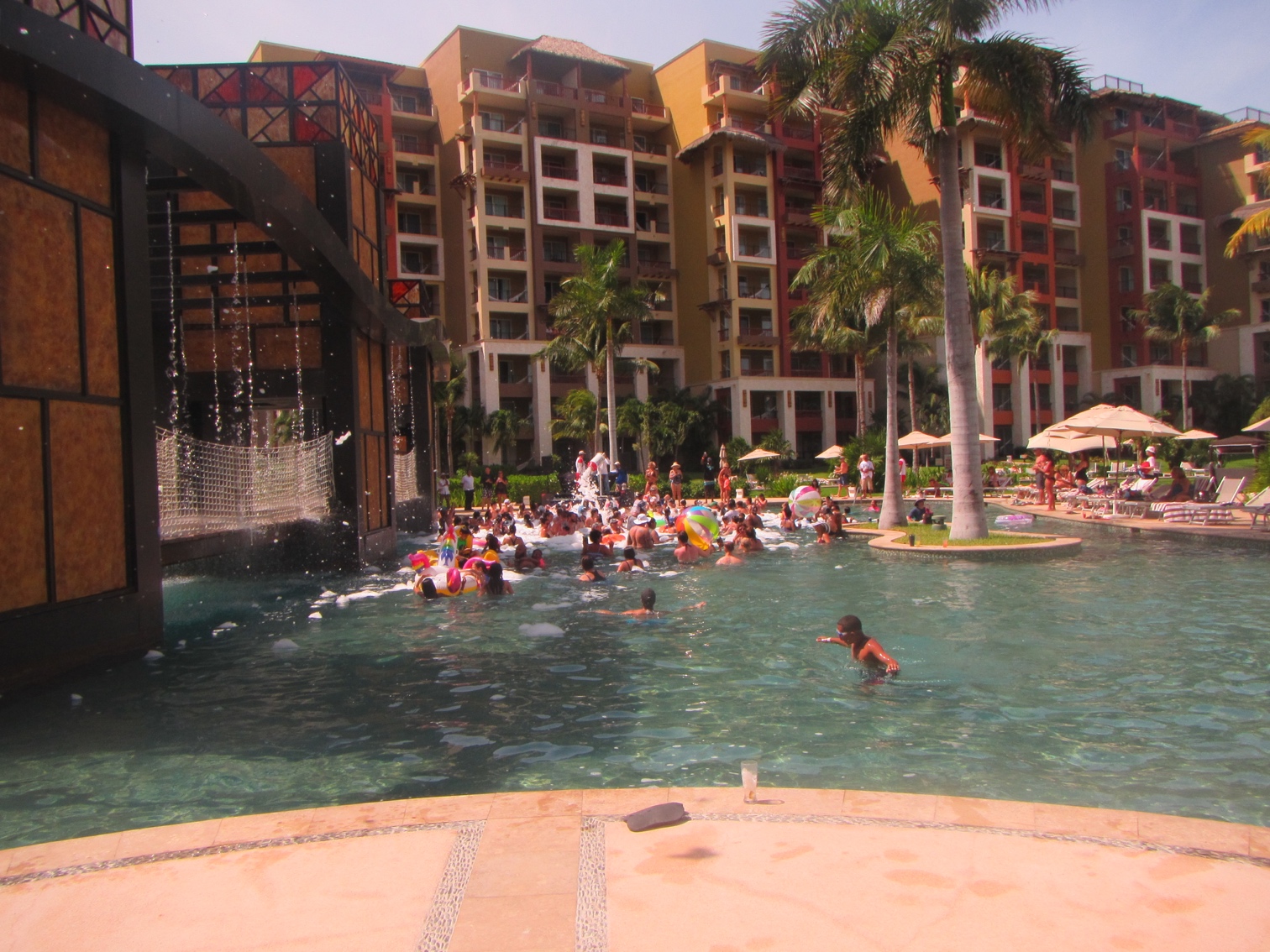
Following our brief sojourn into the land of fantasy, we departed for our timeshare in Cancun, Mexico, for a bit of “Fabulous.” The culinary arts practiced in this resort are second to none. Their mixologists are also well skilled, and heavy-handed. In other words, along with a wonderful two-bedroom accommodation complete with a full kitchen, gorgeous ocean view, and lots of other pluses, we were set for some beach-combing, pool swimming, fooding, and drinking on a grand scale. This is one of the family pools. There are also pools for adults only, and kiddie pools.
Yes. This is a “Fabulous” place to unwind, and relax.
(Click to enlarge)
After ten days of this study in low blood pressure, it was time to hit the road and check out some “Fantastic” stuff, including one of the Seven Wonders of the World. Our first stop was Santiago, Chile, where we were met by our tour-guide, Lorena, who showed us the downtown area. It was very informative, and entertaining as we tagged along with her. It was, however, a bit much for us to handle after just getting off the plane from Cancun. Naomi and I, at this point, had onion soup for brains. They also have buskers of various types, musicians, mimes, et cetera.
We then were escorted to a lapus lazuli store, where we bought some carvings that we “needed,” and were introduced to “Pisco Sour,” a cocktail that is very popular in Chile, Easter Island, and, as we were to later find out, Peru.
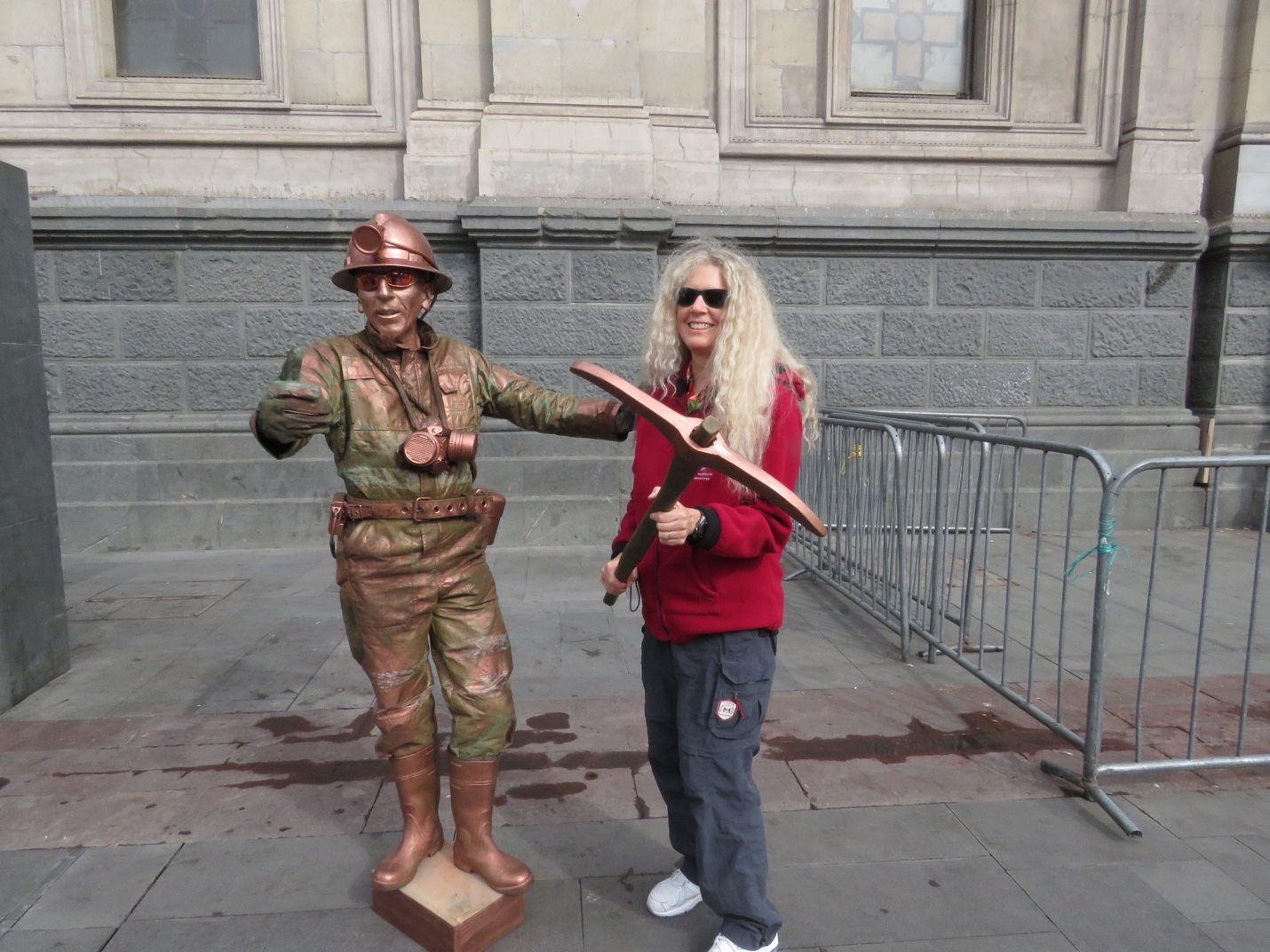
This is Naomi with a mime. He didn’t have much to say. At that point, neither did Naomi.
(Click to enlarge)
After the obligatory oohing and aahing at the various relics of the past, it was time for us to check into our hotel, and get some dinner. And what a dinner it was. We had no idea of the size of the servings at the little restaurant, located half of a block from our hotel. We both ordered soup, along with trout ceviche for Naomi and fettuccini with fruiti de mar (seafood in a pomodoro sauce). The first inkling of what was to come was when our waitress delivered our soups. Each serving was in a terrine made for four. Naomi’s serving of ceviche would have choked Paul Bunyan. My “dainty dish” was approximately one pound of perfectly al dente prepared fettuccini, smothered in the fruiti de mar. Thus it was that we took two-thirds of our dinner back to our hotel room in to-go containers. Knowing that we were facing an early flight the next morning, we figured that the leftovers would serve as our breakfast. At this point, we decided to honor our appointment with Morpheus.
Up bright, well maybe not so bright, but definitely early, we made our way back to the airport, “breakfast” in hand, to catch our flight to Easter Island. The name was bestowed on Easter Island by the Dutch explorer, Jacob Roggeveen, who landed on it on the 5th of April, 1722, Easter. If Jake would have been Jewish, it would have been named “Passover Island.” Oh well, such is history and fate. It was originally named Rapa Nui, pronounced Wrap A Noo Eee, by its original Polynesian settlers, who arrived there around 1200 CE. Depending upon who your historian is, their population rose to between 2,000 and 3,000, or 17,000. With the arrival in 1722 of Europeans, came diseases, and Peruvian slave trade, along with emigration to other islands, that decimated the native population to 111, or 150 by 1877. Rapa Nui, Easter Island, is 3,500 miles from the nearest continent. It’s rather rustic with a vengeance. In our hotel there is no radio, television, air conditioning, screens on the windows, or internet. Our hotel is isolated in the midst of this isolation, and run by a kindly, but powerless elderly lady. By powerless, I mean that if you had a problem with your hotel room, such as no hot water, et cetera, you were pretty much out of luck. Their friendly handyman was not the sharpest pencil in the box either. He did, however, after much tinkering around, replace a light bulb for us. So they made a great pair. However, in the midst of this well-meaning ineptitude, there was a chef, who was world class. Every meal that we had at our hotel was a solid five star adventure, including fish, fowl, and beef. This place would have been heaven on earth for David Thoreau. The weather is quite similar to that of Monterey, California, in November, cool, and damp with occasional rain.
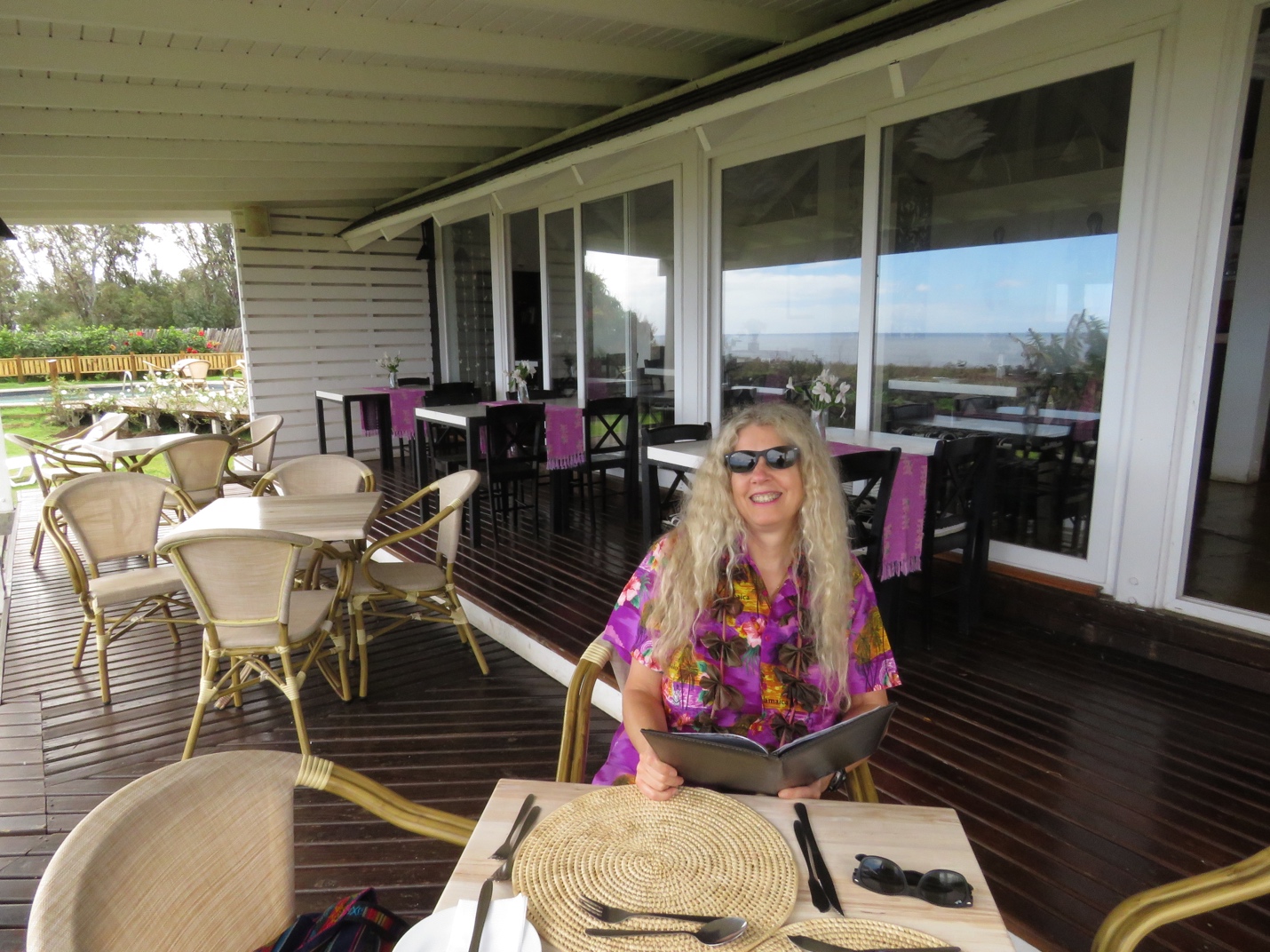
This is Naomi about to order something wonderful.
(Click to enlarge)
As usual, we tried to learn a bit of the local language. Iorana, pronounced I OH RANA, is simply “hello.” It’s a good ice-breaker with the indigenous folks, who are the descendants of the Rapa Nui islanders. “Aku Aku” is Rapa Nui for “Bad Spirits,” as is “Kava Kava.” I don’t understand why these words have to be said twice. Our driver-guide, Maua, pronounced Ma U Ah, is a direct descendant of the Rapa Nui. He regaled us, practically non-stop, with stories of his people, and how they managed to survive in the face of such adversity. At first it seemed strange that we learned that he was related to almost everyone we met, or saw. Then the reality hit us. Has anyone ever heard of inbreeding? Well hey, it’s a family affair. “The family that plays together….” Our third day with Maua, he bestowed a “mojo” upon each of us that we wore around our necks during our entire stay on the island. A bit of advice. Do not rent a car while there. Most of the roads are just dirt with potholes. As an added attraction, there are very few road signs. So your GPS will be useless. Let the natives do the driving. They know where they are going, and how to get there.
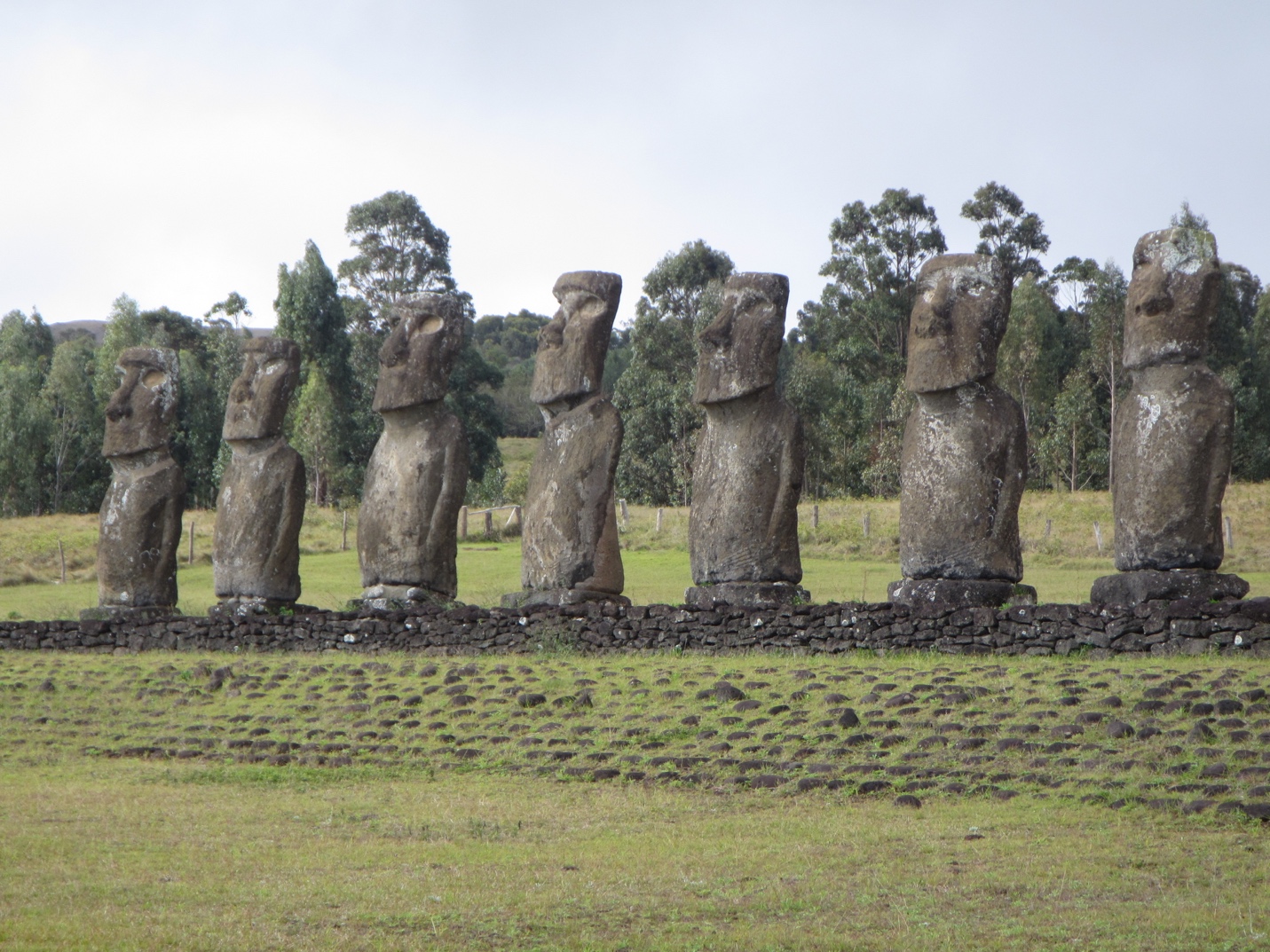
These are not Snow White’s Seven Buddies. They are Moai, pronounced Mow Eye. There are almost 1,000 of these massive statues on the island. How they were carved, and moved into place is still a subject for conjecture.
(Click to enlarge)
The tours conducted by indigenous descendants are not “bargain basement” affairs. One tour was six hours, another was seven hours, complete with a running history of the people and the land. There was time for lunch during each. Be sure to have comfortable walking shoes, and a rain coat. An umbrella will get blown away. As we were poured their versions of “home brew,” they would say, “Manuia,” pronounced Man Oo Ee Ah, which freely translated by Maua, means L’Chaim, Salud, Prost, in the Rapa Nui language. We used this a lot!! The fact that they have kept their language, as well as their customs alive, is a testament to their tenacity, and resilience as a people in the face of modern man’s intrusion and destruction. Life and land go on.
Time to fly back to Santiago. Spend the night, and then on to Lima, Peru. Not Lima, Indiana all of you Cole Porter fans. A quick connection with a flight to Cusco, followed by “Toad’s Wild Ride” to our hotel, capped off the evening. After a wonderful meal, headlined by Alpaca tenderloin, and other Andean goodies, topped off by a couple of Pisco Sours, it was time to hit the “Lilly Whites.” BED. By the way, there is a bit of “friendly competition” between Peru and Chile as to who makes the best Pisco Sours. We were only too happy to endorse each when in their mother country.
The hotel, Pakaritampu, was a bit rustic, but had a good shower and bed. As wonderful as the restaurant was, that’s how lame the hotel staff was. They simply couldn’t give us a wake-up call, or get our laundry done properly. Yes. They “lost” some of our clothes, until we pointed the items out to them. I think Pakaritampu means “Great view, but dumb staff.” Thank G-d for our I-Phones for our wake-up calls. Oh the travails of traveling!
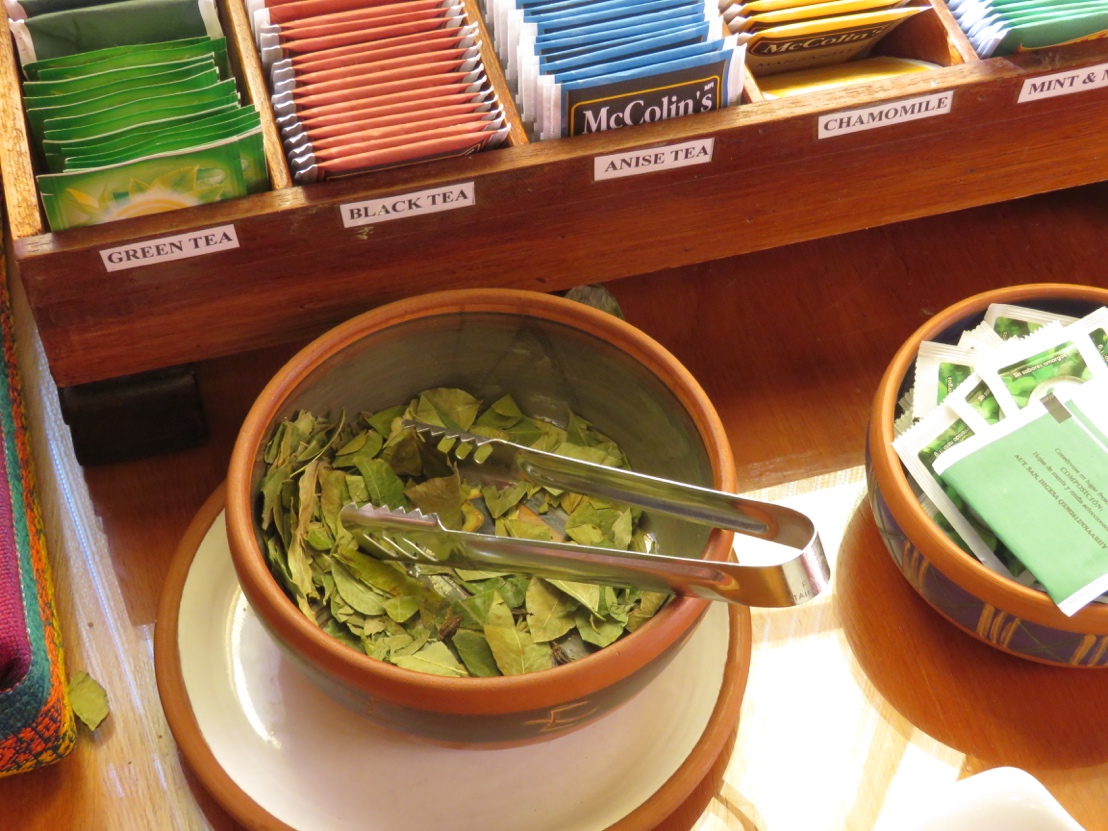
Peru, through the years, has enjoyed a reputation for its fine production of Coca leaves, which sometimes are made into a fine powder, and exported globally, albeit illegally. However, here in Peru, the leaves are left alone, and served with meals, without being processed and ground into “Peruvian Marching Powder.” Yes. It is totally legal. For those who have a bit of a problem awakening from a good night’s sleep, the leaves, with or without a double espresso, will cleanse the mental cobwebs of even the most devout sleeper. It seems to simply wake one up, without the customary “Howdy Doody Jaw,” or clenching of the teeth. However, with a bit too much of it, it can lead to re-arranging the furniture in one’s hotel room.
(Click to enlarge)
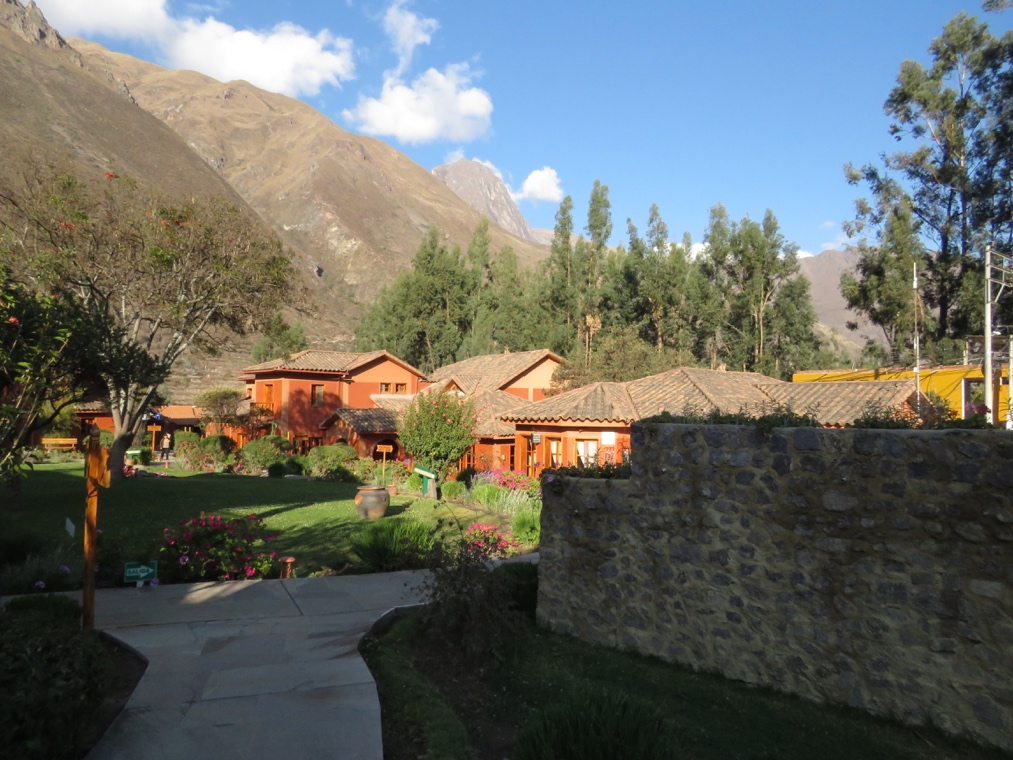
Being nestled in the midst of the Andes, the location of our hotel was perfect for our upcoming adventures, as well as marvelous viewing of the natural surroundings.
Here’s an example of the view from our hotel room. Yes. It really is that gorgeous.
(Click to enlarge)
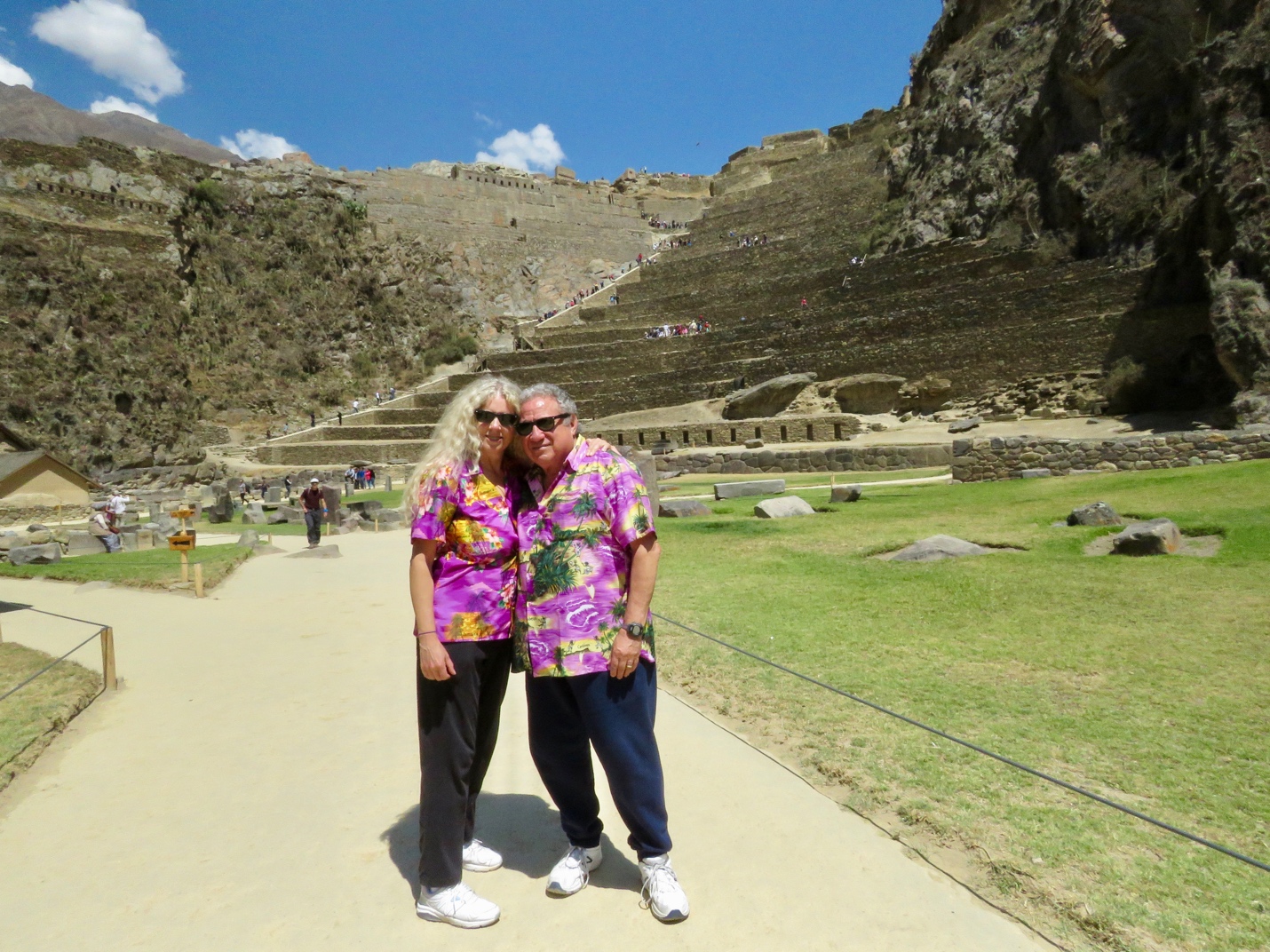
After a terrific breakfast, we were off to see the Sacred Valley. What was constructed there is almost beyond belief. The Incas were mainly farmers, not warriors. Albeit, they could defend themselves. However, the way they constructed plateaus for planting and residing was amazing. They had to bring into the valley all of the top-soil, as well as rocks by Llama, and/or on their own backs. Llamas were limited to how many kilometers they could go per day, as well as how much weight they could bear. This, to me, is an example of tenacity on steroids. There was also the factor of the heat of the day. These folks were serious workers. They chewed coca leaves for energy, rather than stopping for a beer and sandwich break.
This is us “Pre-hats” in the Sacred Valley. Yes. It was a massive undertaking.
(Click to enlarge)
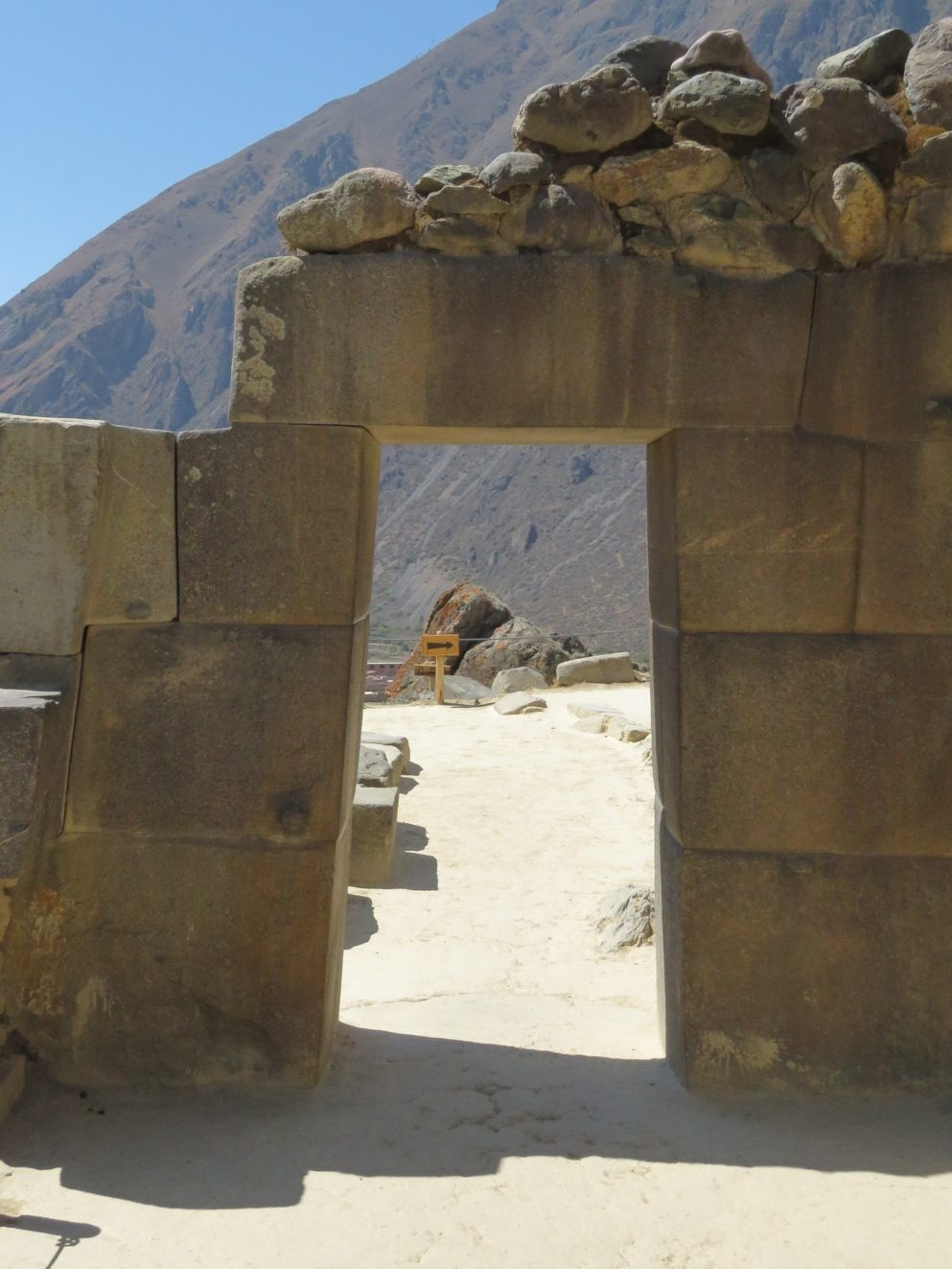
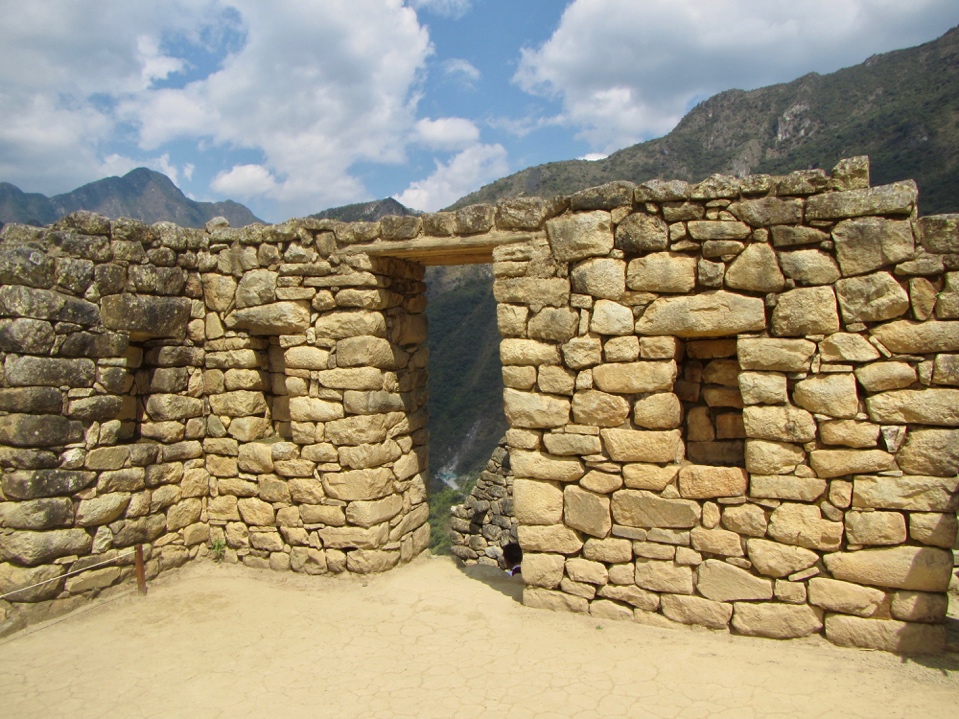
While we were prowling around here with our tour-guide, Natalie, we picked up some interesting tid-bits of knowledge. This area is known for its propensity for rock ‘n’ roll…earthquakes. The Incas were aware of this. So, when they erected their structures, they had figured out that portals and doors shaped in a trapezoid, rather than rectangle, or square, could handle the undulations, and violent rocking of the frequent earthquakes, and temblors. It’s too bad that the builders of San Francisco, and other cities on the west coast of our country never figured this out. By the way. When people refer to an era as “Pre-Columbian,” they mean prior to Christopher Columbus and his boys arriving in what became “The Americas” in 1492. It’s interesting how when one person becomes famous, you never hear of his/her siblings. Have you ever heard of Bill Columbus? No. But you’ve heard of his brother, Chris.
How’s this for a trapezoidal doorway?
(Click to enlarge)
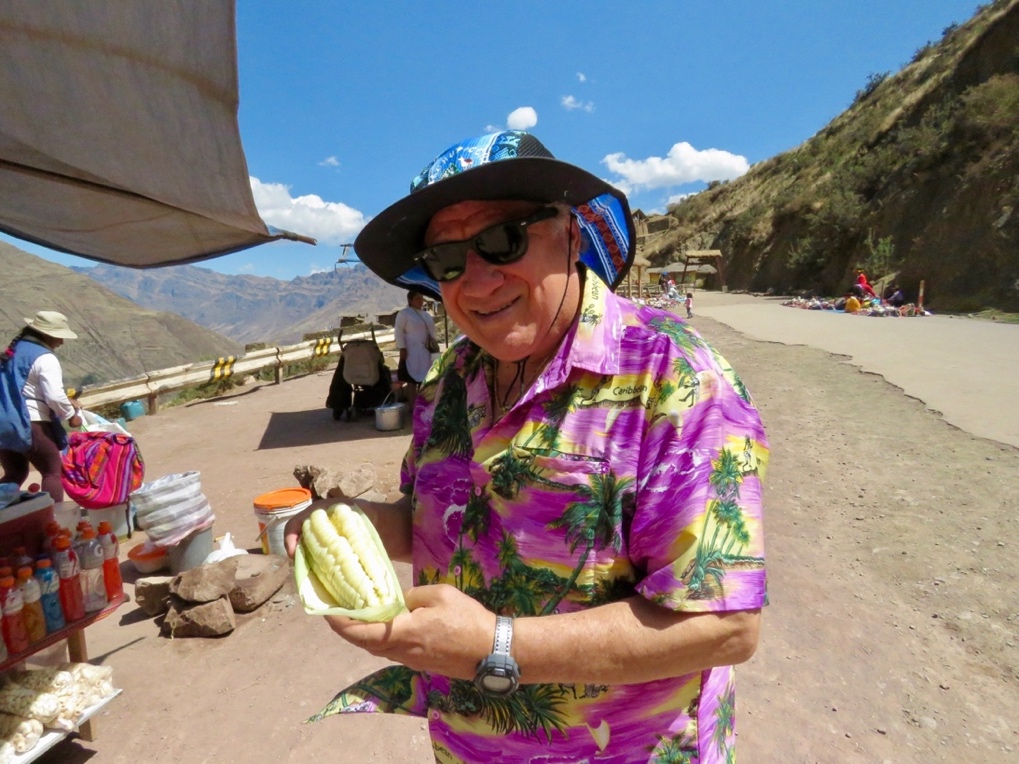
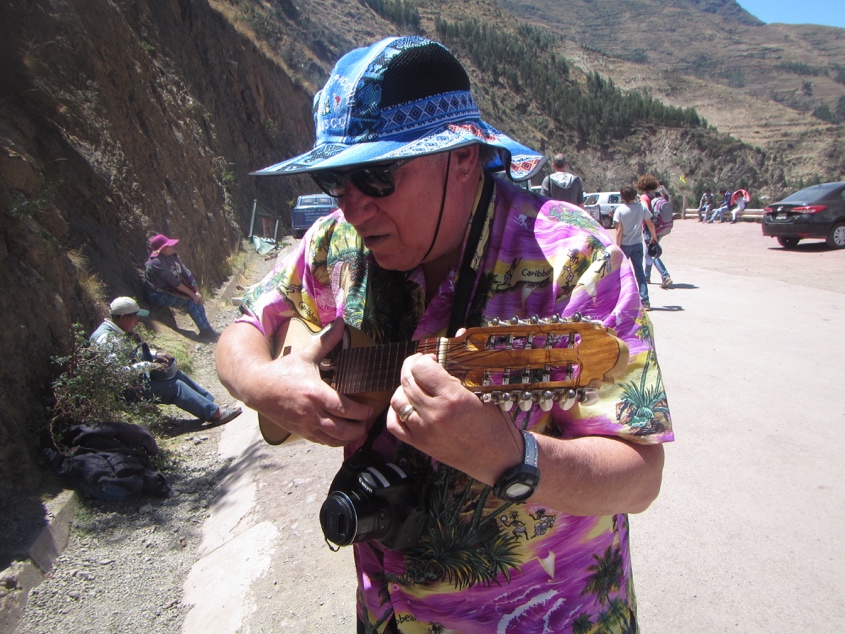
On our way down the mountain, we encountered groups of people selling some rather unique stuff. One of our first investments was a pair of hats for intense sun protection. The ears of corn that they sold had the biggest kernels that we had ever seen, or heard of. One fellow even tried to sell a 10-stringed ukulele to me that not even he could play….No sale.
This is giant kernel corn for corn-lovers only. Notice goofy hat!
(Click to enlarge)
For all of you pickers, this is a ten-stringed ukulele.
(Click to enlarge)
After a few hours of climbing up, down, and around this incredible paean to sheer determination, and stress-engineering know-how, it was time to visit the “town,” Pisac. Many of the residents dress in the fashion of their forebears, while others prefer the styles of today. One of the constants is the desire to sell their wares. Yes. They bargain. And so do we. Naomi found some blankets and stuff that she realized at that very moment, that “We needed.” So, undaunted, I stepped into the breach to bargain with this woman who spoke very little English. In true “Cisco Kid and Poncho” style, I hablad with her, and came to a price that pleased all concerned. I think that my hat was the deciding factor in the deal.
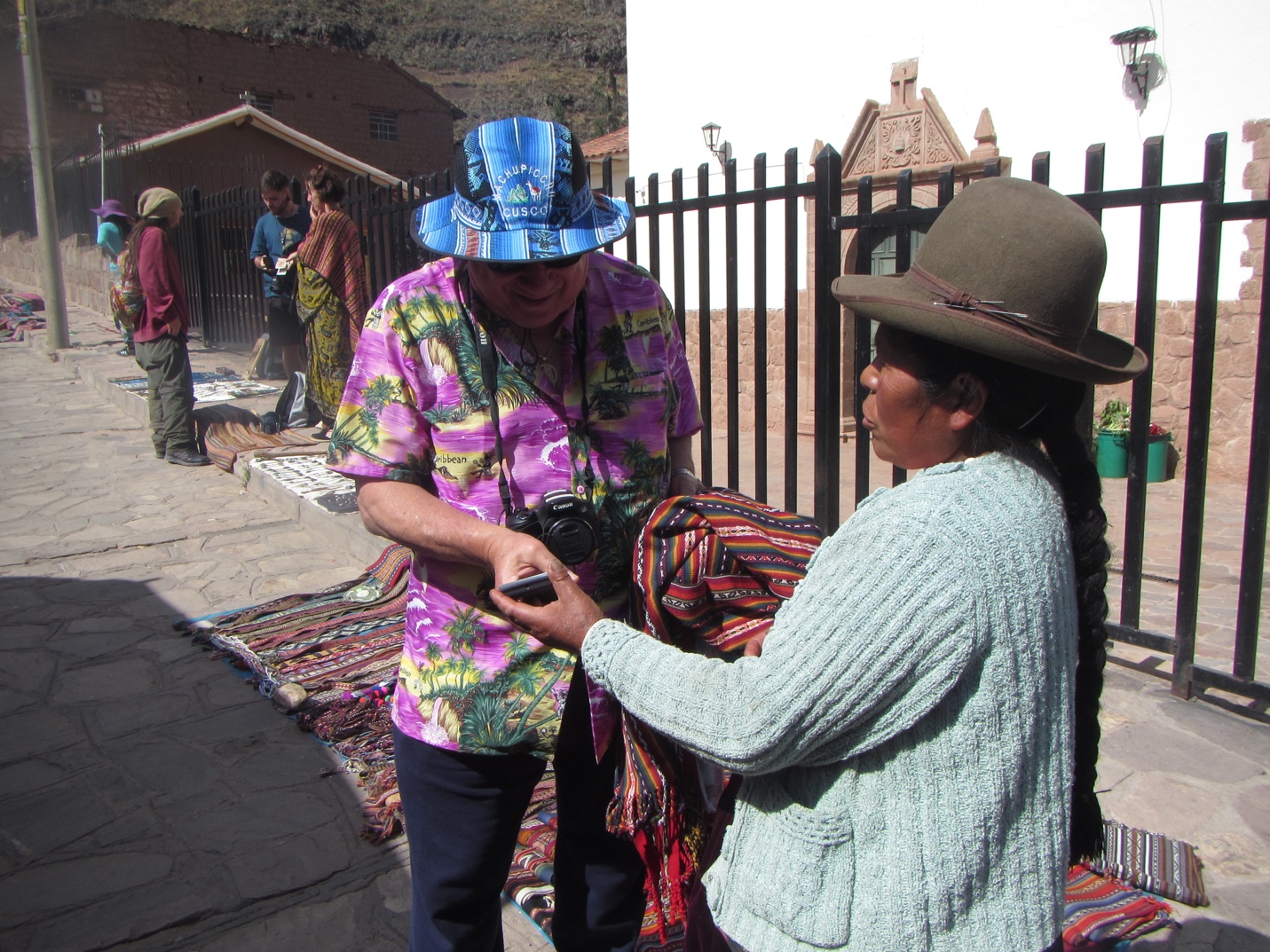
(Click to enlarge)
Following this multi-lingual victory, we were off to see some more of the town. What we saw really amazed us. A few years ago, we went to India, where we saw some goofy looking mini-vehicles called tuk-tuks. We thought that we’d never see them again. Lo and behold, there they were in beautiful downtown Pisac! Yes. They really are that small. Safety is of little or no concern. The folks who drive these cars zip in and out of traffic as if they’ve chewed every coca leaf in Peru. Like in many other localities, traffic lanes are merely suggestions, as are traffic lights and signs. These vehicles are definitely not for Walmart shoppers.
This is a Tuk Tuk.
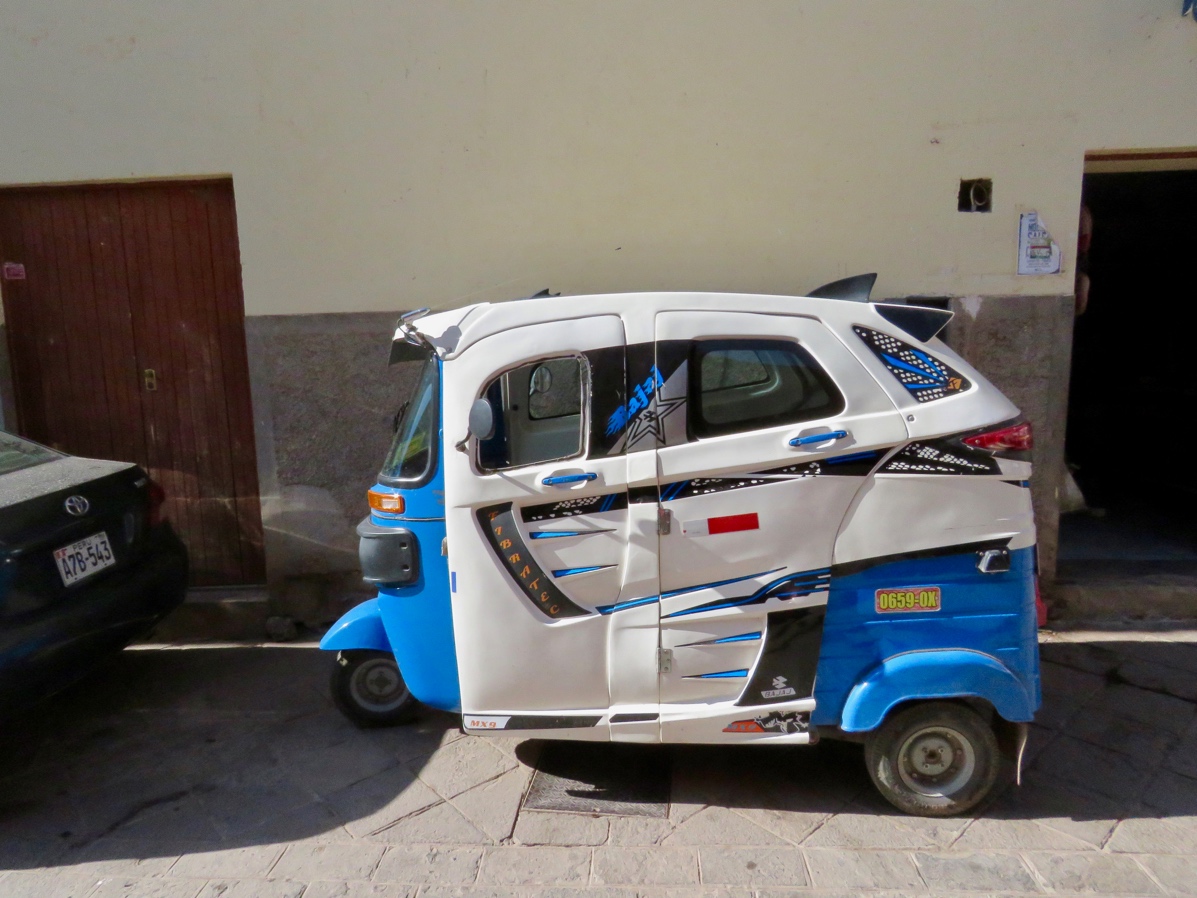
(Click to enlarge)
I was able to bargain with the older men and women. However, when there were children doing the selling, bargaining was out of the question. These kids knew the rules of the road, and clung to them tenaciously. Thus, with the kids, I paid full price for everything. They’re a tough bunch. They would do well in a Damon Runyon novel. The coin of the realm is Soles, pronounced Solees.
Here’s one of the little bandits. Yes. I paid her for this picture.
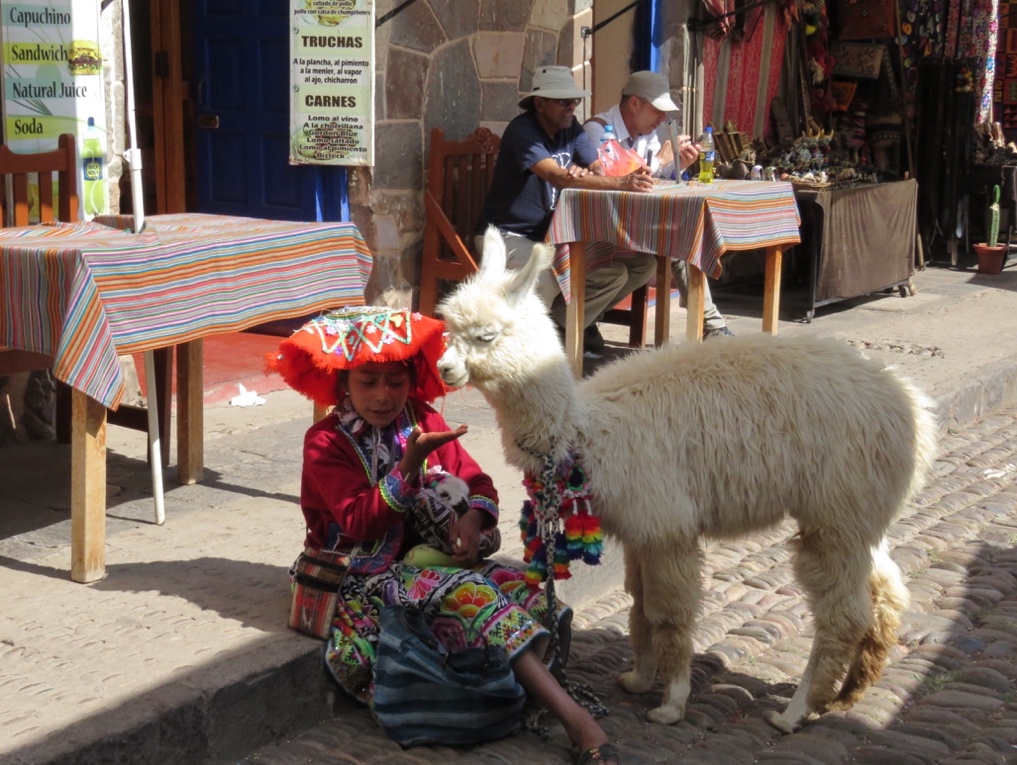
(Click to enlarge)
Here is a typical shopping street in Pisac. Note that Naomi is off to the side. She is not into bargaining.
Naomi is the poster child for retail purchasing.
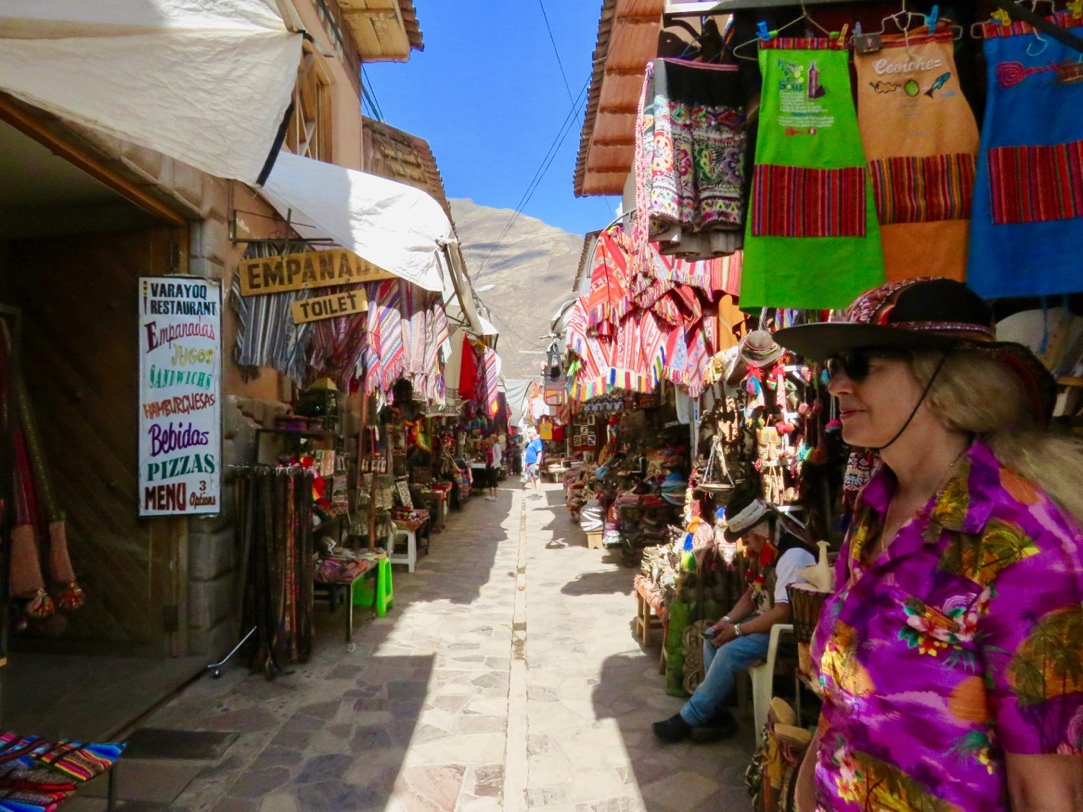
(Click to enlarge)
After all of the hiking in, and around the Sacred Valley and Pisac, one would think of taking a day of rest. WRONG!! The next day was my birthday. What better way to celebrate one’s 74th birthday than scaling the trails of another of the Wonders of the World, Machupicchu? This is truly a headliner made of stones. Again, all of the stones, top-soil, and plant seeds were brought in by llamas and workers with bags on their back.
Following an Andean breakfast, exotic fruits, eggs, et cetera, we got onto the train to Machupicchu. Yes. It’s one word, with three “Cs.” Some people, however prefer to divide it into two words. Take your pick. The train was a domed affair with excellent visibility. The lands that we saw, along with the mountains, rivers and streams were nothing short of breathtaking. We were also elevated to the tune of eleven thousand feet, which is also breathtaking, but in a different way. Machupicchu was discovered in 1911 by Hiram Bingham III, a Hawaiian-born American explorer. The character, Indiana Jones is purported to based on Bingham, and his book, Lost City of the Incas. By the way, Inca is spelled sometimes with a C, and other times with a K. Once again, take your pick.
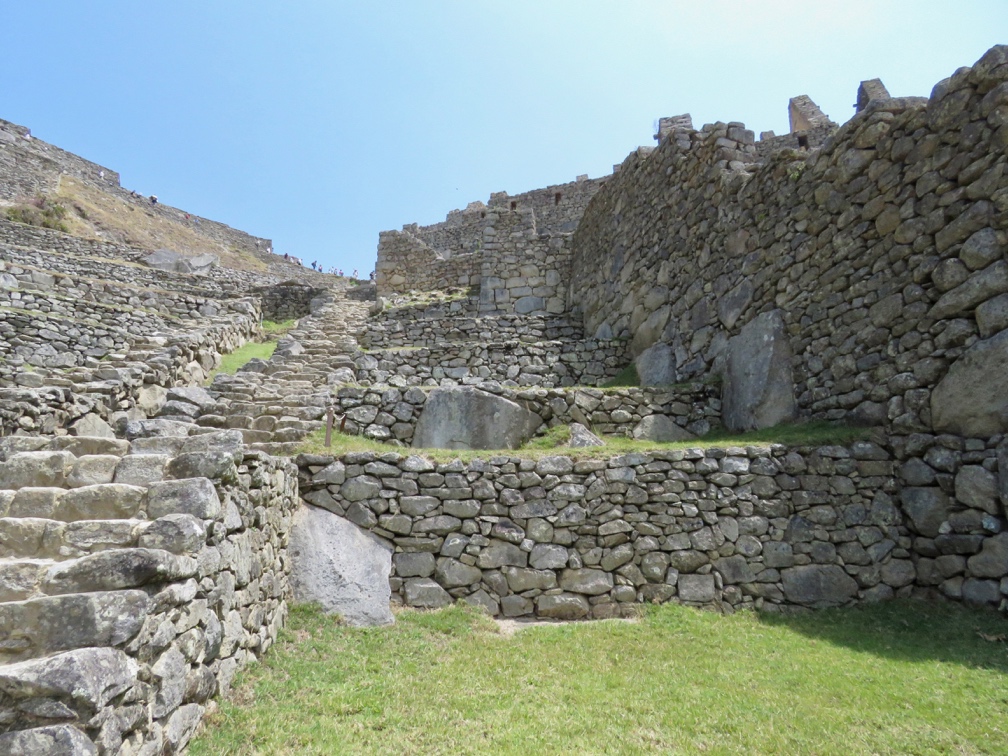
Here’s a small portion of one of the trails. No hand rails.
(Click to enlarge)
Once again, we see the use of trapezoidal doors and portals.
(Click to enlarge)
Many of the fruit trees, such as passion fruit, still bear fruit. And plants, such as coca leaf bushes, still bear coca leaves. Again let me stress that the Incas were primarily farmers and builders, both skills at which they excelled amazingly.
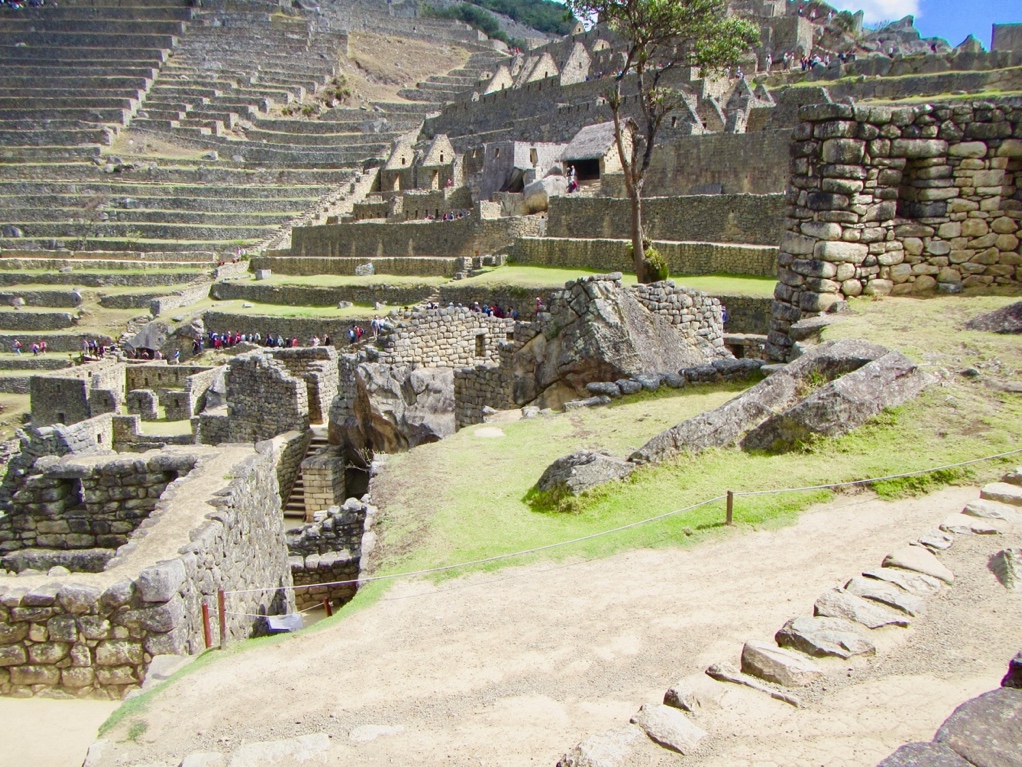
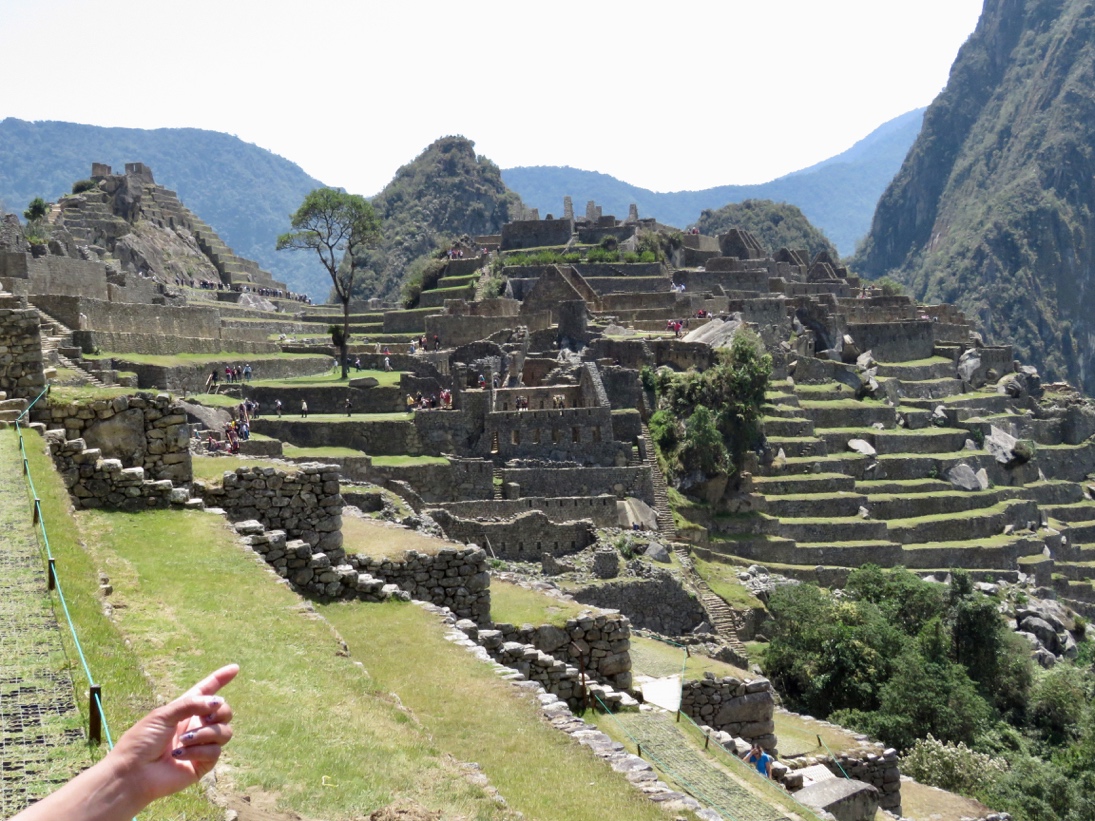
This one section of a plateau here in Machupicchu will give you an idea of the massive breadth of this construct.
(Click to enlarge)
In creating this incredible feat of rock and plant engineering, the Incas left little, or nothing to chance. They even had indoor toilets, as well as a well operating water system. Those who worked were rewarded with houses and food, et cetera. Those who did not work were ostracized, and subsequently either starved to death, or were banned from the community to meet a distasteful end.
A fact that stuck with us was that all of this was built and cultivated in only fifty years. These folks were not goofing off. They meant for their stuff to last.
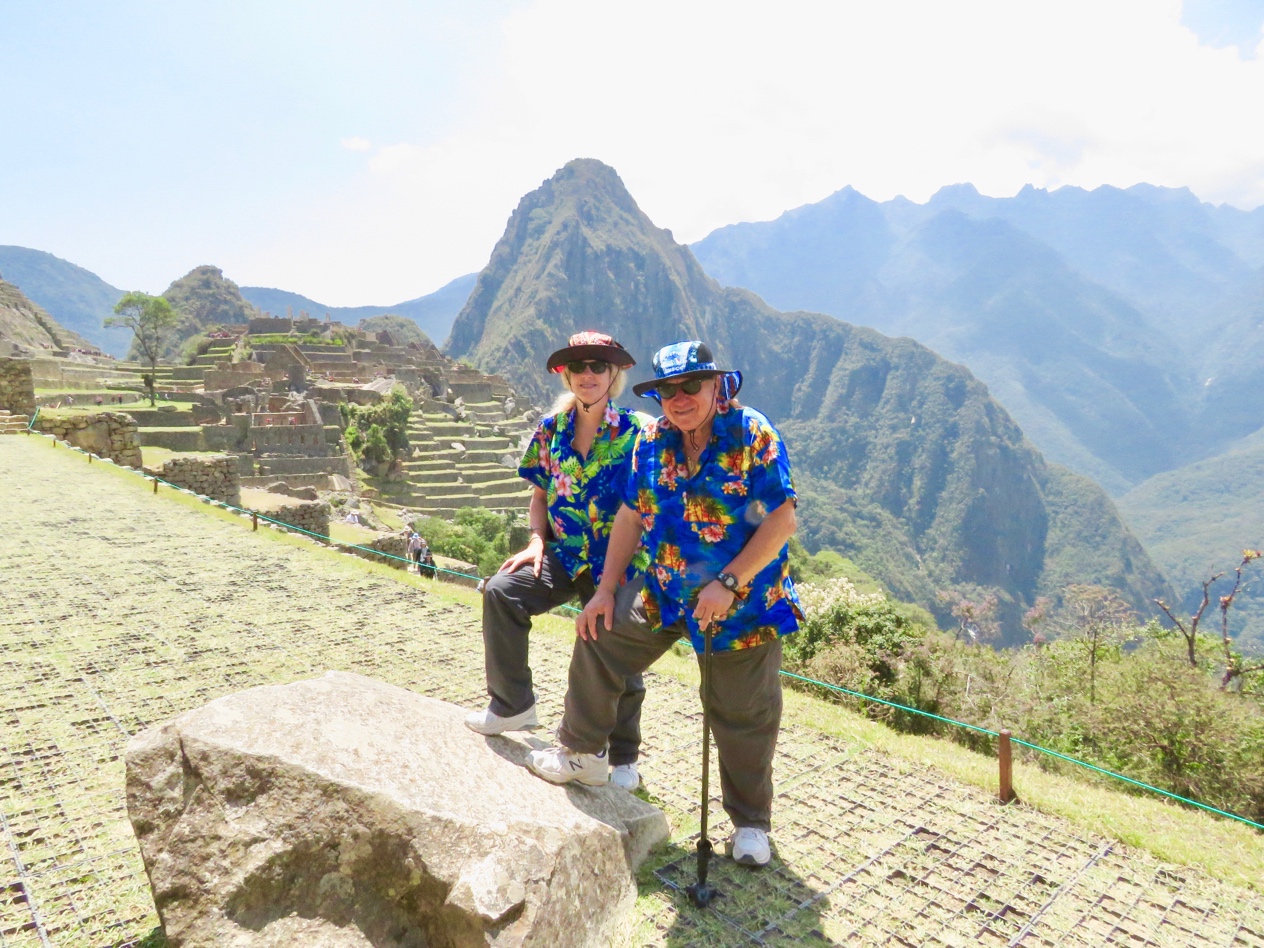
Here we are. “The intrepid climbers.”
Are you sure that Edmund Hillary started out this way?
(Click to enlarge)
Here’s one more view of Machupicchu.
(Click to enlarge)
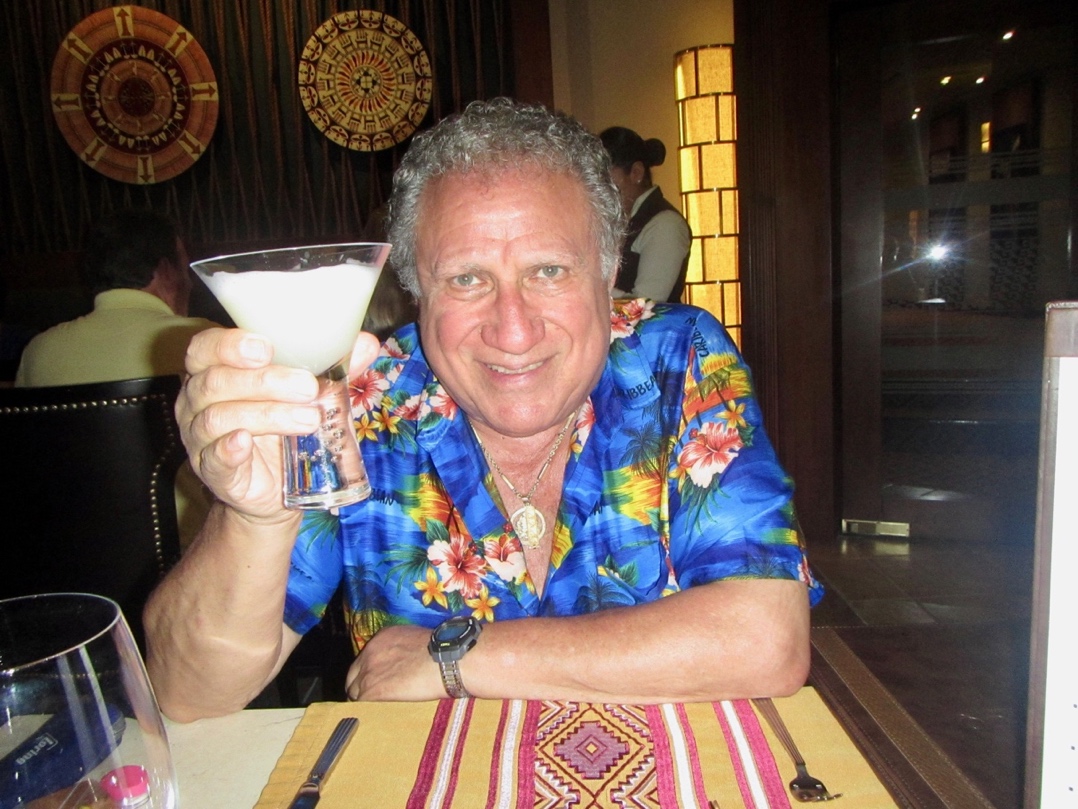
After all of this mountain-goating, it was time for a bit of relaxation, and celebration.
Yes. A Pisco Sour to start things off.
(Click to enlarge)
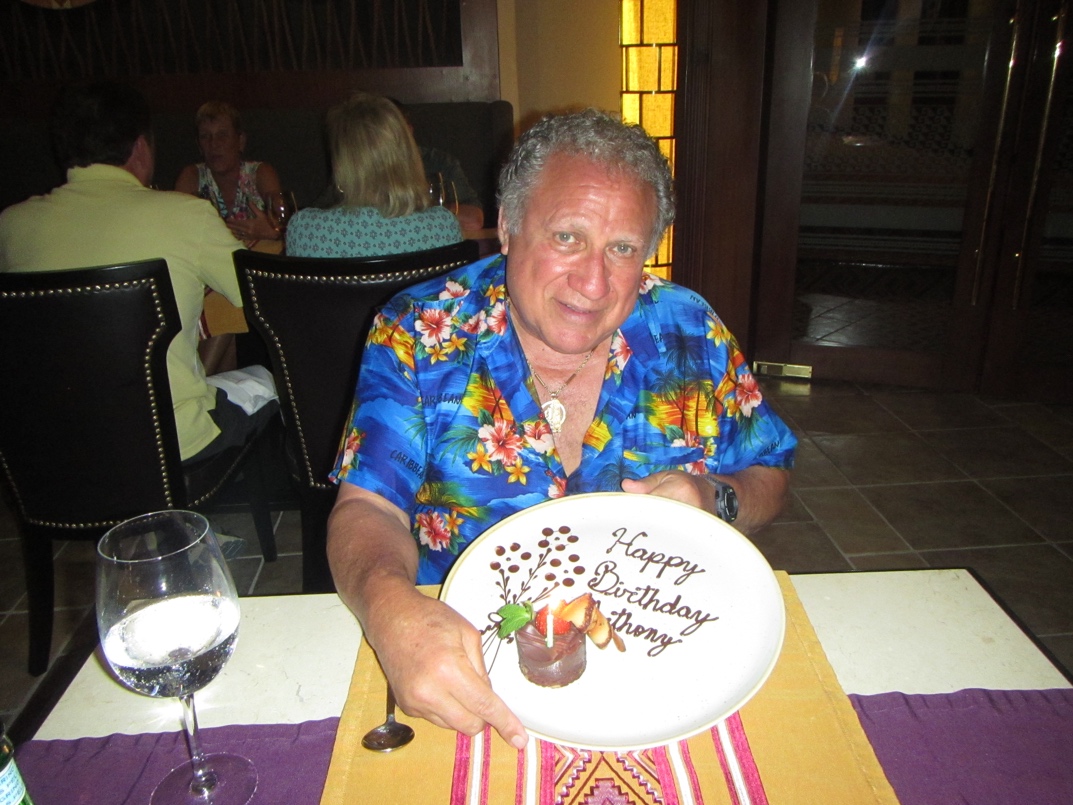
And a birthday goody for a capper.
(Click to enlarge)
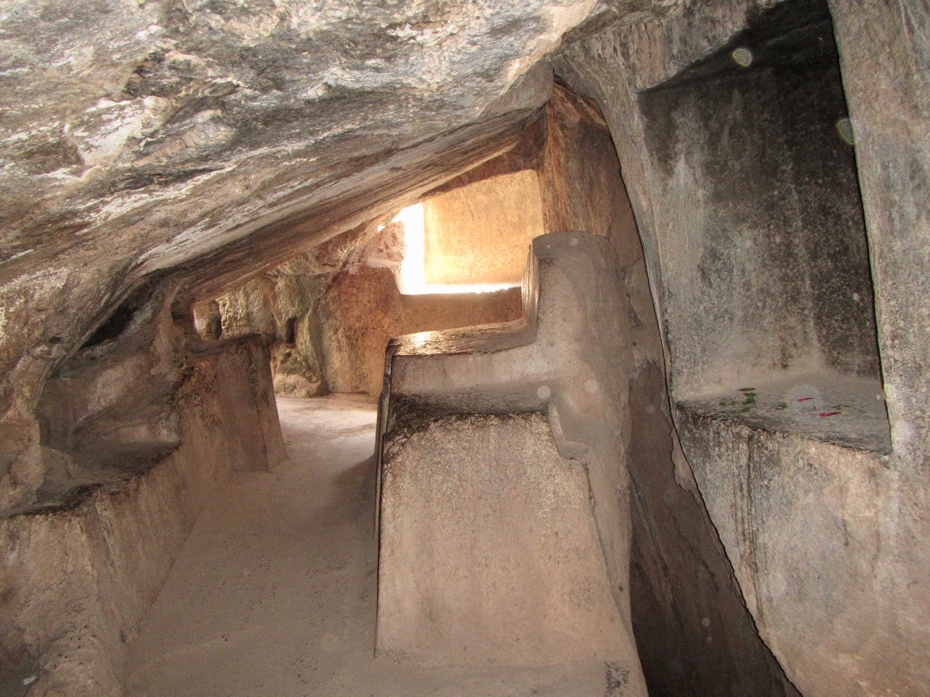
After the toasting, and getting a bit toasted, it was time for lights out. We had to get up for the next day’s surprises. Yes. We found ourselves in Sacsayhuaman, pronounced just the way it looks, where there are some sacred caves. It’s not often that we metamorphose from hill-climbers to spelunkers. This, however was one of those times. Here is the interior of one of the caves.
For once in my life I felt tall. I kept hitting my head on the ceiling.
(Click to enlarge)
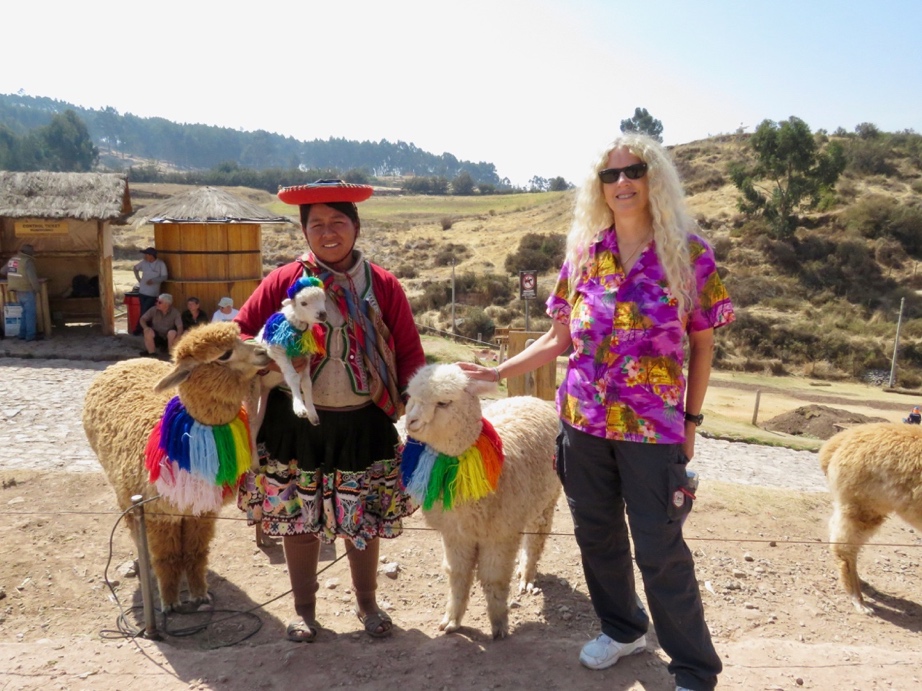
Have you ever wondered what alpacas look like before they are made into steaks, sweaters, blankets, et cetera?
Here is Naomi with a native lady and her alpacas.
Yes. They, the alpacas, are very soft and cuddly.
(Click to enlarge)
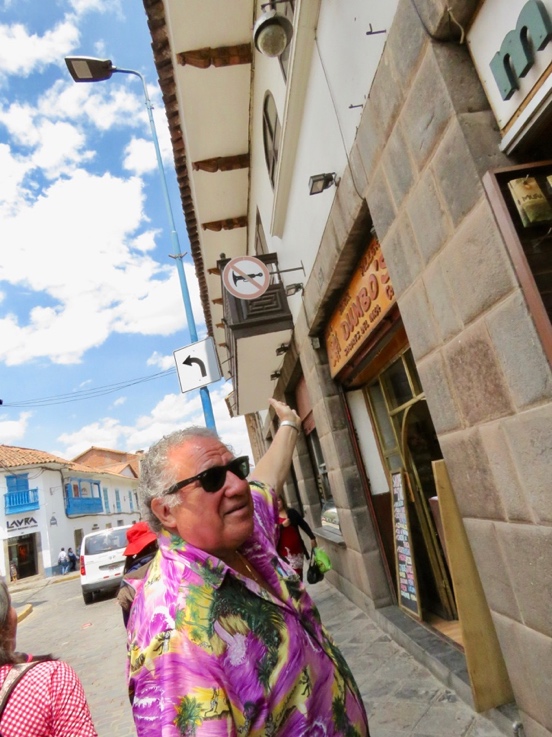
I’m not trying to insinuate that Peruvians harbor any prejudice regarding trumpet players, but this sign speaks volumes for itself.
(Click to enlarge)
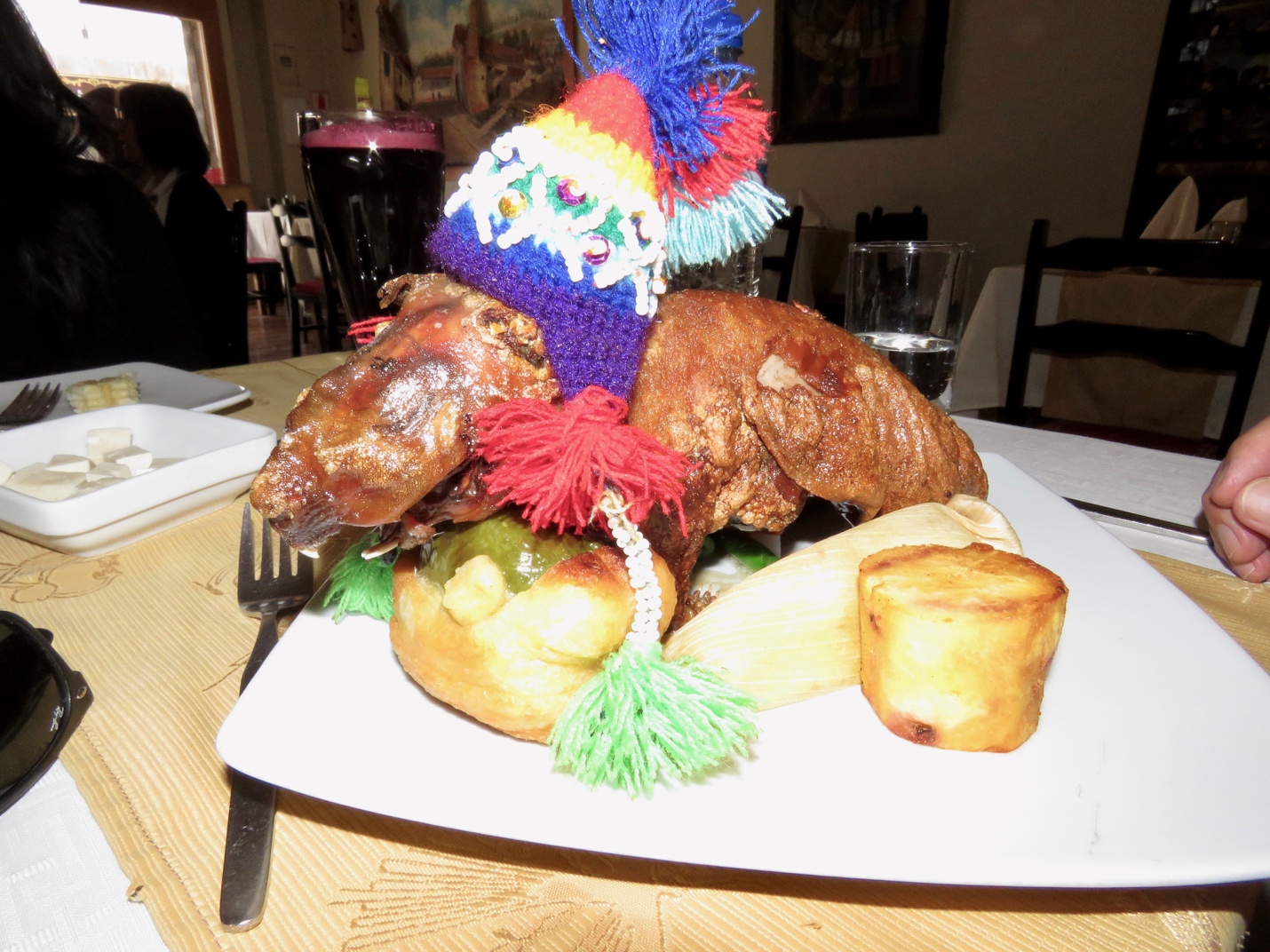
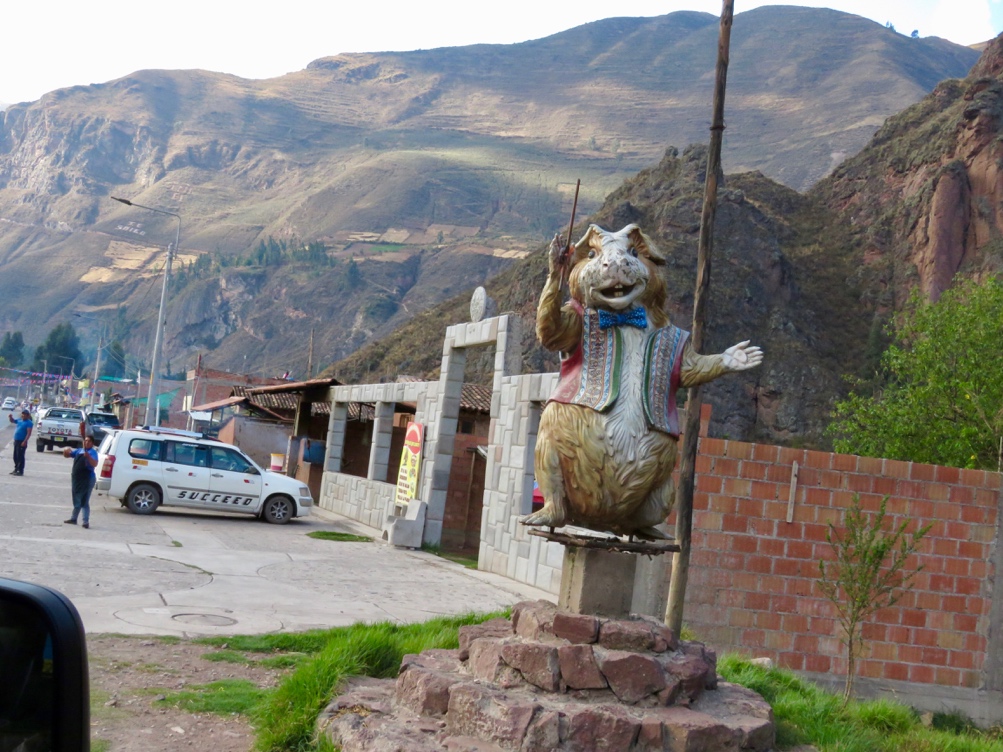
We knew that at some point our tour-guide, Natalie, was going to get us into a situation that would be VERY MEMORABLE. Well here it came. We had seen signs on the way to downtown Cusco and Agua Calientes with Guinea Pigs on them greeting tourists. Cusco, once the capital of the Inca Empire. It’s truly a fabulous blend of bygone days, and the present. We had no idea of Guinea Pigs’ role in the town’s reputation. We now found out. Natalie took us to a lovely restaurant, where she did the ordering for herself and us.
Yes. Roasted Guinea Pig. This is a delicacy for which Cusco is noted. It was delicious, after we got over the shock of what we were eating. The meat is tender and tasty. The Guinea Pig has a lot of little bones, so one must be careful when dining on them. For some reason, I don’t think it’s kosher.
The hat is alpaca wool.
(Click to enlarge)
Here is how they are used as “greeters.” Not unlike the “Howdy Pardner” sign in Downtown Las Vegas. However, one does not eat the cowboy waving the “Howdy Pardner” greeting.
(Click to enlarge)
What could follow an epicurean adventure of this magnitude? We went back to our hotel, bade Natalie a fond adieu, and packed for our trip to Lima. As I wrote above, for you Cole Porter fans, Lima, Peru, not Lima, Indiana. This time it was to be for more than simply a plane connection. Upon arrival, at the airport, we hooked up with our guide, Marguerita, who immediately regaled us with horror stories of gangs of thieves, whose sole purpose in life is to steal jewelry and money from tourists. Thank G-d, we had no problems of that nature during our entire stay in Lima. I guess we didn’t look like we had much in the way of valuables. Apparently being dressed in sweat-pants, aloha shirts and sneakers didn’t appeal to the unsavory element of that area. She, like our other guides, was a veritable fount of Peruvian historical data, of which she freely shared with us in an almost non-stop oration that she cranked out the following day, as we walked from museum to museum, cathedral to cathedral, and arboretum to arboretum, including the Larco Museum.
The Quechuan, pronounced Ketch Wan, people are the original indigenous inhabitants of the Andes. Their language, which is still in use, is Quechua. It is the most widely spoken language family of indigenous peoples of the Americas. The word, Inca, means chief in Quechua. When the Spanish conquistadores showed up, and began their slaughter of the Quechuan people, they simply called them Incas. The basic reason that the Spaniards, although outnumbered, conquered the Quechuan tribes is that the tribes were constantly at war with each other, rather like the North American Indian tribes.
Besides desecrating, and basically destroying the indigenous religions and societies, they, the Spaniards introduced entirely different music to the areas that they conquered. Prior to the arrival of the Spaniards, Peruvian music was all played on various horns, conch shells, pan flutes, and percussion instruments. The Spaniards introduced them to string instruments such as the guitar, violin, and harp, to name just a few. It’s strange to think of the brutish conquistadores adding such delicate instruments to the indigenous orchestrations.
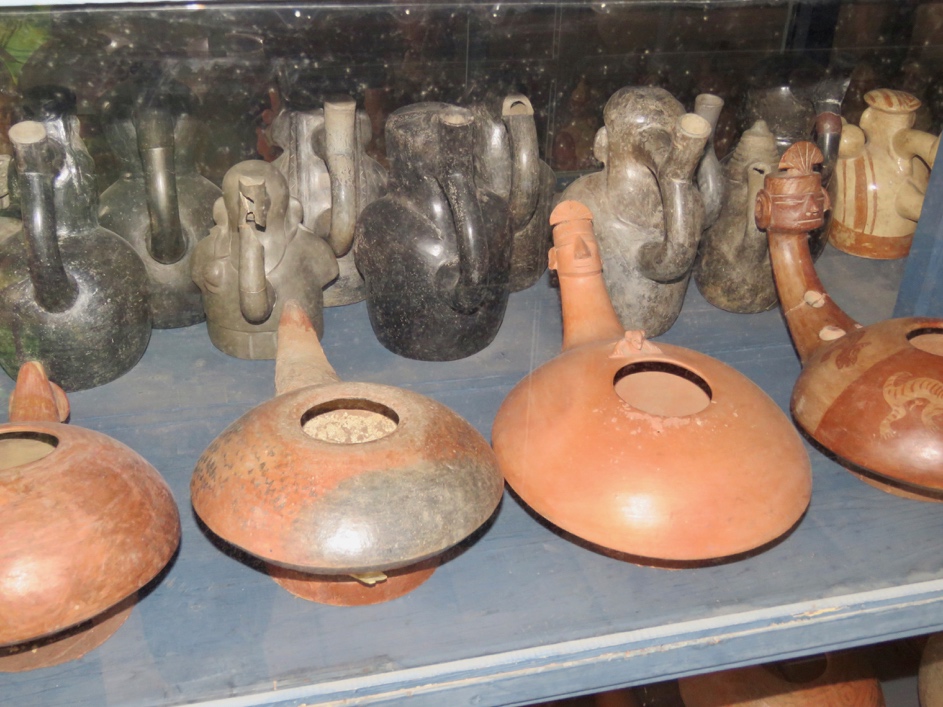
The Quechuan pottery reflected some of the day to day life. We found these to be quite revealing. These pots were used for making popcorn with the giant kernels that are shown above.
(Click to enlarge)
It’s not Whirley Pop, but it evidently worked for them. Pass the salt please.
There were also examples of some rather explicit erotic pottery, that, for the sake of propriety, I’m omitting. Contact me if you’d like to see any of it.
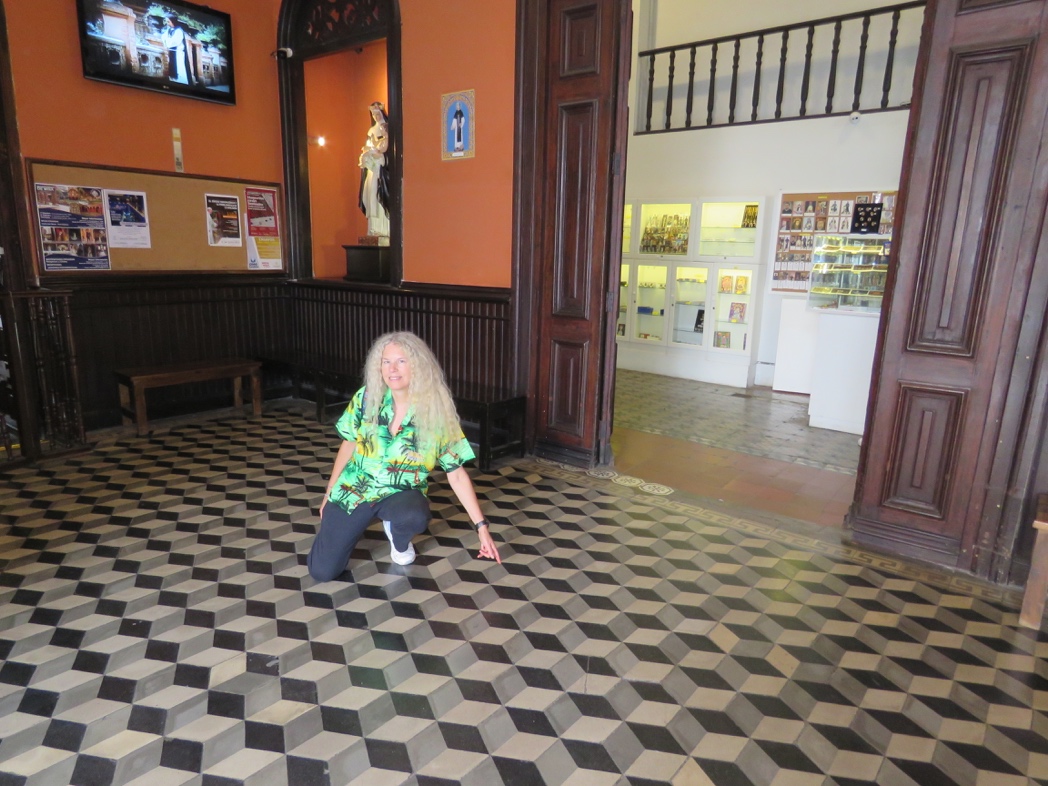
This picture of Naomi was shot in the Larco museum. Yes. The floor is perfectly flat.
(Click to enlarge)
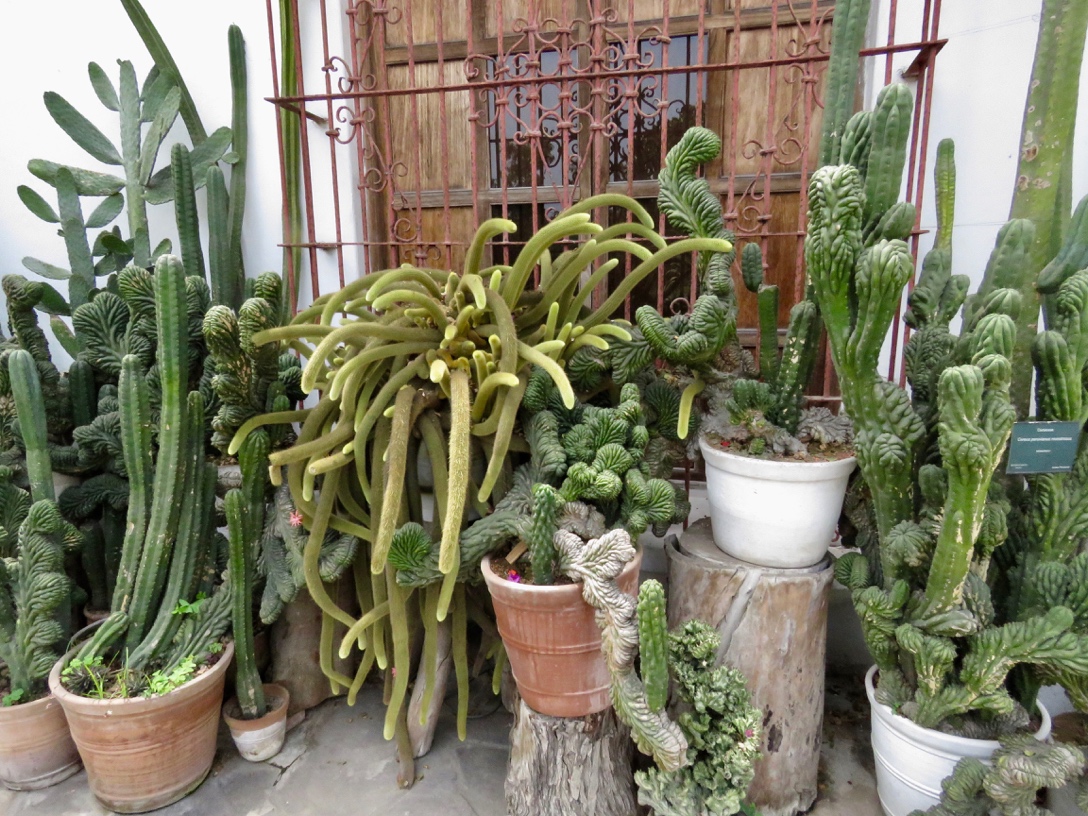
Outside of one of the other museums we saw this cactus garden. We had never seen cacti of these genuses before.
(Click to enlarge)
After four or five weeks of exotic climes, peoples, foods, and libations, we decided it was time to head home, and try to organize in our heads all that we had seen, climbed upon, eaten, and drank. As always, no matter how fantastic, or fabulous, the places we visit are, it’s always good to get home to our “place in the world.”